When I Saw My Ex-Husband Remarry One Week After Our Divorce, I Never Imagined a $2,184 Hospital Bill, a Canceled Insurance Policy —Then His Boss Exposed the Truth During His Honeymoon Photoshoot
For illustrative purposes only
The pictures hit my phone like an ambush.
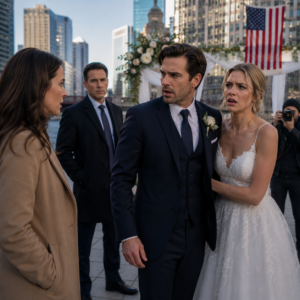
One week divorced, and Jason Parker was already smiling under a white arch beside the woman he’d spent three years describing as “exactly his type.”
I was sitting in my car in a Walmart parking lot on the south side of Denver, two plastic grocery bags sweating on the passenger seat. One bag had split open, and tomatoes rolled under my seat like tiny red marbles, bumping softly against the brake pedal every time I shifted. I stared at the screen, thumb hovering over the message, my heart doing that stuttering thing it did when I realized someone I trusted had decided I wasn’t human anymore.
Rachel had sent the photos with a simple line: You okay?
In the first photo, Jason’s jaw looked sharper than it did the day he walked out of our mediation session. He wore a navy suit that probably cost more than my last three utility bills. The bride—Madison Hale, if Instagram was to be believed—glowed with that curated, lacquered kind of beauty that made you feel like you’d missed a meeting where everyone else learned how to be perfect. Her hair fell in soft waves, her smile wide enough to sell toothpaste, her hands folded around a bouquet like she’d been born holding it.
Jason’s hand rested on her lower back with a possessive ease that made my stomach turn. He’d never held me like that in public. With me, he’d been careful—like affection was a resource he didn’t want to waste on someone who might start expecting it.
I turned off the engine. The silence in the car felt too loud.
Walmart’s parking lot always looked tired to me: sun-bleached lines, shopping carts drifting like tumbleweeds, people hustling toward their cars with their own private disasters packed into paper sacks. That afternoon, though, it felt like the whole world had leaned in close to watch my reaction. Like the asphalt itself was whispering, See? He changed. You didn’t.
I pressed my palm over my mouth and forced air into my lungs. Crying felt like signing something, like giving Jason a receipt for the power he’d taken. I wouldn’t do it. Not here. Not for him.
Still, the pictures burned.
One week. Seven days. Barely enough time for the ink on our divorce decree to dry.
I could hear his voice, clean and casual the way it always was when he wanted me to question my own memory: You’re overreacting, Claire. You’re making a big deal out of nothing. Madison is just someone who understands me.
That was his favorite word—understands. He used it the way other people used weapon.
When we were married, he made sure I knew I was always one step behind whatever a “good wife” was supposed to be. If I was tired, it meant I lacked ambition. If I asked for reassurance, it meant I was insecure. If I wanted to talk about the way he disappeared into his phone at dinner, it meant I was controlling. If I cried, it meant I was unstable. If I stayed calm, it meant I didn’t care enough.
There was no right move. Only different ways to lose.
Jason and I hadn’t started out like villains and victims. That was the part that still confused people when they heard the word divorce, because everyone loves a clean story.
I met him at a rooftop birthday party the summer I turned twenty-six. Denver’s sunset was bruised purple behind the mountains, and Jason leaned against the railing in a crisp button-down, talking about “big plans” with the confidence of someone who had never doubted he’d get what he wanted. When he turned and saw me, his smile landed like a spotlight. He asked the kind of questions that made you feel seen: What do you love? What scares you? Where do you want to end up? By midnight, I’d told him things I usually kept tucked away. By two a.m., he was walking me to my car, fingers brushing mine like an accident that kept happening.
For months, he was intoxicating. He brought coffee to my office just because. He left notes on my windshield. He’d look at me across a room like I was the only person there. When he proposed a year later in a snow-dusted park, I said yes with my whole body, the way you say yes when you think you’ve found safety.
Then, slowly, the rules changed.
It started with little corrections. He’d “joke” about my laugh being too loud. He’d suggest outfits that were “more flattering,” then sigh if I picked something else. He’d tell stories about me at dinner parties in ways that made me sound scattered, and when I tried to interrupt he’d squeeze my knee under the table—hard—like a reminder of who controlled the narrative.
When I got promoted to project lead at my firm, I came home buzzing with pride. Jason listened, nodded, then said, “That’s great, babe. Just don’t let it go to your head.” I remember the exact drop in my stomach, the way my excitement turned into a need to prove I deserved it. I tried to laugh it off. Jason watched me like he’d won something.
By our second anniversary, affection came with conditions. If I agreed with him, he was warm. If I disagreed, he became a wall. Silent dinners. Doors shutting too softly. A sarcastic “Wow, okay” said with enough venom to make me apologize for things I hadn’t done. He never hit me. He didn’t have to. He made me doubt the shape of reality, and that kept me obedient.
The worst part was how good he was in public.
“I can’t do this anymore,” I said. “I want a divorce.”
Jason looked up slowly, like I’d interrupted him during a show. Then he smiled. “Okay,” he said. “If that’s what you want.”
It wasn’t what I wanted. It was what I needed. And he knew the difference.
In the weeks that followed, he became strangely efficient. He booked the mediator. He printed forms. He talked about timelines like we were closing on a house. Every time I hesitated, he’d remind me how “reasonable” he was being, how much he was “saving” me by keeping things clean. I didn’t realize then that “clean” meant fast—fast enough that I wouldn’t notice what he was quietly undoing behind my back.
He pushed hard for me to sign the final agreement without reading every page. “It’s standard,” he said, tapping the paperwork with impatient fingers. “Do you want to drag this out? Do you want to make it ugly?” The phrase make it ugly was his version of a threat. I signed because I was tired, because I wanted the war to end, because I thought peace was just a signature away.
A month later, I found the insurance paperwork folded neatly in a file drawer he’d left behind. The termination request had his signature and a date. It was so casual it made me nauseous. He’d planned it. He’d timed it. He’d watched me walk into that specialist appointment thinking I was covered, and he’d let me.
That was when I understood that Jason didn’t just want to leave. He wanted to leave me smaller.
The divorce itself had been less an ending than a slow stripping away. I’d gone into it thinking the worst part would be signing papers, dividing furniture, telling people. But divorce wasn’t one giant heartbreak. It was a hundred smaller ones—every small cruelty you’d tolerated finally becoming a bill you had to pay.
I wiped my eyes with the back of my hand and opened the message again. Rachel’s photos kept loading, one after another: Jason and Madison cutting cake; Jason dipping her dramatically like they were auditioning for a commercial; Jason laughing with his coworkers, all of them clapping like he’d achieved something noble rather than something fast.
In the last photo, I saw the detail that made my throat tighten: Jason’s mother, Linda, standing near the front row, wearing the pearl earrings I’d given her for Christmas the year she told me I “wasn’t really Parker family material.” She was smiling like she’d always wanted this outcome.
I dropped my phone into my lap and let my head fall back against the seat.
My groceries were getting warm. My day was still happening. My rent was still due. My life didn’t pause just because Jason had started a new chapter with a woman who looked like she came with a ring light and a brand deal.
I gathered the runaway tomatoes, shoved them back into the ripped bag, and drove to Rachel’s house.
Rachel lived fifteen minutes away in a worn-but-cheerful neighborhood where kids rode bikes in packs and every other front yard had a plastic flamingo. Her house smelled like detergent and tomato sauce and the faint sweetness of the vanilla candles she bought in bulk. The second I stepped inside, her two kids swarmed me, sticky hands grabbing at my sleeve, yelling my name like I was a celebrity who’d shown up at their living room.
“Miss Claire! Miss Claire! Look what I built!”
Their laughter hit me like warm water. For a second, I could breathe.
Rachel met me in the kitchen, hair in a messy bun, flour on her cheek like she’d been fighting a pie. She took one look at my face and said, “Don’t tell me you saw the pictures.”
I nodded, and the muscles in my jaw shook from holding myself together.
“He got married already,” I said. The words sounded ridiculous out loud, like a punchline.
Rachel pulled two mugs from the cupboard and filled them with coffee so strong it could have stripped paint. “Of course he did,” she said, voice flat with contempt. “Guys like him always need an audience. They can’t breathe unless someone’s clapping.”
A laugh slipped out of me, thin and humorless. “Maybe she’s better than me.”
Rachel’s eyes narrowed with the intensity of someone about to throw hands. “Stop. Don’t do that. You survived him. That makes you smarter than whoever just married him.”
I stared at the steam rising from my mug. My hands were steady now, but my insides still felt like they were vibrating.
Before I could respond, the front door banged open. Rachel’s husband, Mark, walked in with a toolbox in one hand, his shoulders slumped from work. He froze when he saw me, then softened like he’d noticed the bruise on my spirit.
“Hey,” he said quietly. “You doing okay? Need anything?”
The kindness in his voice hit me harder than the wedding photos had. Mark wasn’t doing anything heroic. He wasn’t offering to fix my life. He was just being decent, the way a person should be. But I’d spent years with a man who treated basic humanity like an optional subscription plan, and now even small kindness felt like a shock.
“I’m okay,” I lied automatically, because lying had been safer than telling the truth for so long that it had become a reflex.
Rachel watched me over the rim of her mug. She didn’t push. She just existed beside me, steady as a lighthouse.
That night, I went back to my apartment and tried to sleep. I failed.
Every time I closed my eyes, I saw Jason’s grin under that white arch. I saw his hand on Madison’s back. I heard the imaginary applause he must have been soaking up like sunlight.
At 3:12 a.m., I sat up and opened my laptop. I searched “how long after divorce is too soon to remarry” and read articles that all sounded like polite ways of saying: there is no rule when the person never respected you to begin with.
At 3:47, I searched Madison Hale.
Her Instagram was public. Of course it was. A grid of photos so coordinated it looked like a magazine layout: brunches, sunsets, designer heels propped at the edge of a pool, captions about “living in gratitude.” In the newest post, she was holding a bouquet, ring sparkling, Jason’s hand visible at the edge of the frame like a prop. The caption read: Finally my forever.
Comments spilled underneath, hundreds of hearts, endless Congratulations! and You deserve this queen! I scrolled until my thumb ached.
In one photo from last month, Madison stood in front of a downtown Chicago skyline, wind whipping her hair, captioned: New chapter soon.
Chicago.
Jason had transferred there for his job in January, supposedly for a “promotion opportunity.” It was one of the things he’d used as leverage in the divorce talks, telling me it would be easier for both of us if we “started fresh,” as if he was gifting me peace instead of running away from accountability.
I’d signed the final papers because I was exhausted. Because every conversation with him felt like trying to hold water in my hands. Because I wanted out more than I wanted to win.
I closed the laptop and stared at the ceiling until dawn.
The next day was a Tuesday, the kind of ordinary day that feels insulting when your insides are on fire. I went to work. I answered emails. I nodded at coworkers. I laughed at something in a meeting that wasn’t funny. I made it through the day on autopilot, convinced that if I just kept moving, I wouldn’t collapse.
When I got home, an envelope was wedged under my apartment door.
I recognized the hospital logo before I even bent down to pick it up. My stomach dipped. I hadn’t been to the hospital lately, but I’d had a specialist appointment in February, right before the divorce finalized. Jason had insisted we keep our insurance intact until everything was “settled.”
My hands were cold as I tore it open.
Inside was a bill that looked like it had been printed in a font designed to make you feel small. Total due: $2,184.63.
A note at the bottom in tidy, impersonal language said my insurance coverage had been terminated effective March 1.
March 1 was three days before our divorce was finalized.
Jason had canceled my insurance during the final month of our marriage. No warning. No conversation. Just a button clicked somewhere, a decision made like I was a line item he wanted to erase.
I stared at the paper until the world blurred. Then I sat on the floor, back against the door, and laughed once, sharp and broken.
So this was the real divorce. Not the papers. Not the last name. Not the furniture.
This was facing the tiny, brutal actions he’d been taking behind my back for years—actions that said, clearly: I can hurt you, and you can’t stop me.
For a minute, rage rose hot in my chest. Not the dramatic, movie kind. The quiet kind that makes your vision narrow and your thoughts become knives.
Then something else happened: a strange calm.
Maybe it was because the cruelty was so clean and undeniable that I couldn’t twist myself into blaming me. Maybe it was because I was tired of bleeding quietly.
That night, I did something I can’t fully explain even now.
I hadn’t been invited to his wedding, obviously. I hadn’t wanted to go. But Madison had posted a story about a “honeymoon photo shoot” happening in downtown Chicago, “because love deserves art,” tagged at a public plaza near the river.
And somehow, without planning, without telling anyone, I bought a plane ticket with the credit card I’d promised myself I’d stop using. I told my boss I needed a personal day. I packed a small bag. I flew to Chicago.
Not to confront Jason.
Not to throw a drink.
Not to make a scene.
I told myself I just needed to see. To check whether I was free, or whether I was still chained to the pain he’d left behind like a ghost leash.
Chicago in March was cold in a way Denver rarely was, a damp bite off the lake that slid under your coat and stayed there. The sky was pale and bright, the kind of light that made everything look honest. People moved through the streets with purpose, collars turned up, hands in pockets, faces set.
I walked toward the plaza Madison had tagged, my boots clicking against stone, my breath puffing in little clouds. I kept expecting my nerves to spike, expecting my hands to shake. But I felt eerily steady, like I was walking toward an appointment with fate.
I spotted them from a distance.
Jason stood near the center of the plaza in a fresh suit, hair perfectly styled, his posture tall with the confidence of a man performing. Madison was in a white dress that wasn’t a wedding gown exactly, but something designed for photos: fitted, elegant, dramatic enough to say newlywed without saying bride. She held Jason’s arm and laughed, head tilted back, like she was auditioning for happiness.
A photographer circled them, calling out directions. “Closer. Foreheads together. Madison, chin down. Jason, smile like you’re trying not to laugh.”
They obeyed like trained actors.
They looked like the center of the universe, like the rest of the city was just background.
I stopped a few steps away, close enough to hear the shutter clicks, far enough to be ignored. I blended into the crowd of passersby the way I’d learned to blend into my own marriage: present, unseen.
For a moment, I thought I’d feel something—jealousy, sorrow, humiliation. Instead, I felt a weird detachment, like I was watching an old show I’d already stopped caring about.
Jason leaned toward Madison as if whispering something. Her smile faltered. Then her expression snapped into irritation so fast it was almost comical.
“Stop filming me,” she snapped, eyes darting past Jason’s shoulder.
I blinked. She was looking straight at me.
It took her a second to realize I wasn’t holding a phone at all. My hands were empty. I wasn’t recording. I wasn’t even moving.
Jason turned, irritation already forming on his face—until his eyes landed on mine.
His body stiffened. For a fraction of a second, his mask slipped. The confident groom vanished, replaced by the man I knew: startled, calculating, furious that reality had entered his curated scene.
“Claire?” he said, voice tight, like my name tasted bitter.
I didn’t answer. I didn’t owe him words.
Madison’s gaze flicked between us. “Who is she?” she demanded, tone sharp, not at all the soft Instagram voice she used in captions.
Jason’s jaw worked. “No one,” he said too fast.
I almost laughed. Three years married, and his instinct was still to erase me.
Before either of them could say more, a tall man in a charcoal coat stepped into the edge of the scene, walking with the firm, unhurried stride of someone used to rooms going quiet when he entered. He stopped near the photographer, eyes narrowing as he focused on Jason.
Jason’s face drained of color. Not a little. All at once, like someone had pulled a plug.
“Mr. Caldwell,” Jason said, voice cracking around the name.
The man’s expression didn’t soften. If anything, it hardened, like he’d found something he’d been hoping not to find. He looked past Jason, taking in Madison’s white dress, the camera, the bouquet, the staged laughter.
Then he looked back at Jason, and his voice cut through the plaza like a blade.
“Did you tell her?”
Jason swallowed. “Tell her what?” he tried, but it came out weak, a pathetic attempt at innocence.
“That you were fired yesterday,” Mr. Caldwell said, each word measured. “Effective immediately.”
The plaza seemed to tilt. The sound of traffic faded. Even the photographer’s instructions died in his throat.
Madison’s smile cracked. “What?” she whispered, the word thin as paper.
Jason took a step toward her, hands lifting like he could physically hold the moment together. “Baby, listen—”
Madison stepped back, eyes wide, the glow around her suddenly harsh. “You told me you got promoted,” she said, voice shaking. “You told me we were celebrating.”
People nearby had noticed. A couple walking their dog slowed. Two teenagers stopped with their phones half-raised, unsure if this was content or just awkward. A woman pushing a stroller paused, curiosity lighting her face.
I stayed still, half in shadow, the way you stand at the edge of a fire and watch it take what it needs.
Mr. Caldwell crossed his arms. “HR will contact you,” he said. “And the investigation isn’t over.”
Jason’s eyes darted around wildly, like he was looking for an exit that didn’t exist. “This isn’t the place,” he hissed, trying to regain control. He glanced at the photographer as if daring him to keep shooting.
Mr. Caldwell didn’t flinch. “You made it public when you used company funds,” he said. “You don’t get to choose the place now.”
Madison’s breath hitched. She looked at Jason like she was seeing a stranger. “Company funds?” she repeated. “Jason, what did you do?”
Jason’s face twisted, anger flashing. “It’s not like that,” he snapped, then immediately tried to soften it. “Mads, it’s complicated. People are misunderstanding.”
“People?” she echoed. “Your boss is standing here saying you were fired. What is there to misunderstand?”
The photographer lowered his camera slowly, as if he’d just realized he’d wandered into a different kind of shoot entirely.
Jason’s hands clenched into fists at his sides. He looked like he wanted to scream, but he couldn’t. Too many eyes. Too many witnesses. An audience he hadn’t chosen.
And suddenly, something in me loosened. Not triumph. Not glee. Just the steady unfolding of truth.
I took out my phone then—not to record, not to post, not to send proof to anyone. Just to do one small thing for myself.
I typed one sentence and hit send.
You always needed an audience. Now you have one.
Jason’s phone buzzed. His gaze flicked down automatically, addicted to screens the way he was addicted to applause. He read the message, and his eyes flashed toward me with pure hatred.
But he didn’t have the courage to step toward me. He didn’t have the courage to say my name again. Because his performance was collapsing, and he needed every ounce of energy to hold up what was left.
Madison’s hands trembled as she lifted her ringed fingers, staring at the diamond like it had suddenly turned into a stone tied around her ankle. “You lied,” she said, voice breaking. “About all of it.”
Jason reached for her. “Madison, please. We can talk—”
She jerked away. “Don’t touch me.”
The words landed like a slap. Jason flinched.
Mr. Caldwell looked at Jason one last time, his disappointment sharp enough to be physical. “Expect a call,” he said, then turned and walked away, leaving the wreckage behind him.
A breeze blew through the plaza, fluttering Madison’s dress, ruffling Jason’s hair, carrying the sound of the river nearby. The city kept moving, indifferent to one man’s downfall.
Madison stood frozen, blinking fast, trying to keep her eyes from spilling. Jason stood beside her, suddenly small, his suit too crisp for the panic leaking out of him.
A minute passed. Then Madison’s shoulders squared.
“Get away from me,” she said, louder this time, so the people watching could hear. “Right now.”
Jason’s mouth opened, but no sound came out. He looked around again, desperate, and for the first time I saw him the way other people must have seen him when he wasn’t charming: a man with no real self underneath the performance, just a hunger for control.
He took a step back, then another. Madison didn’t follow. She looked like she might be sick.
I turned before my face gave anything away.
I walked out of the plaza and into the flow of people, my footsteps steady, my breath even. The cold air pressed against my cheeks, but inside my chest something warm was growing—not joy, not vindication, but space.
Like a closed room had finally opened, and fresh air was rushing in.
Back at my hotel, I sat on the bed and stared at the medical bill I’d brought with me, folded inside my wallet like a reminder. The number didn’t look smaller. The problem wasn’t magically solved. Jason’s downfall didn’t pay my rent.
But it did something else: it told me the truth I’d needed to believe.
Jason hadn’t discarded me because I was lacking. He’d used me because I was convenient. He’d needed someone to absorb his failures, someone to blame when his own life didn’t match the fantasy he sold.
Madison wasn’t his prize. She was his next audience.
And now, even she had started to see the stage lights flicker.
I opened my laptop and pulled up my bank account. The numbers were not kind. My savings had taken hits during the divorce—legal fees, moving costs, the months I’d spent too drained to fight for every penny. I grabbed the hotel notepad and a pen and made a budget the way my dad had taught me when I left for college: rent first, then food, then utilities, then everything else.
I listed the medical bill under “urgent” and stared at it until it stopped feeling like a monster and started feeling like a math problem.
It was still overwhelming. But it wasn’t impossible.
I searched for part-time remote work and applied for a small online gig—data entry for a marketing firm, a few hours a week. It wasn’t glamorous. It wasn’t a new life on a yacht. But it was something I could control.
I flew back to Denver the next day.
Rachel picked me up from the airport, eyes wide. “What did you do?” she demanded the second I got into the car.
“Nothing,” I said, and meant it. “I watched.”
She stared at me for a moment, then laughed, sharp and delighted. “Sometimes watching is enough,” she said.
Over the next few weeks, life kept moving.
The insurance issue took phone calls and forms and hold music that made me want to scream. I filed paperwork, argued with representatives, learned terms I’d never wanted to know. Eventually, after enough persistence, my coverage was restored through my employer, and the hospital agreed to a payment plan that didn’t swallow me whole.
I started therapy because I needed someone trained to help me untangle the knots Jason had tied inside my mind. My therapist, Dr. Lin, had kind eyes and a voice like calm water. In the first session, I tried to minimize everything the way I always had.
“He wasn’t that bad,” I said automatically. “I mean, he never—”
Dr. Lin held up a hand gently. “You don’t have to protect him here,” she said. “You only have to tell the truth.”
So I did. In pieces at first, then in full sentences. I told her about the way Jason rewrote conversations. The way he called me dramatic when I asked for the bare minimum. The way he’d withheld affection like punishment. The way he’d made me feel lucky that he stayed.
Every time I spoke, the air got a little lighter.
One afternoon in late April, I got a notification on my phone. Madison Hale had posted a new picture—no Jason, no rings, no bouquet. Just a skyline shot and a caption: Sometimes the dream is a warning.
I stared at it for a long moment, then set my phone down without liking it, without commenting, without making it my business.
Jason didn’t contact me again. Not with apologies, not with rage, not with excuses. Maybe he was too busy dealing with HR. Maybe he was too busy trying to build a new stage somewhere else. Maybe, for the first time, he had no audience left to convince.
In therapy, I admitted something that surprised me when it came out of my mouth.
“I’m not angry at him anymore,” I told Dr. Lin one day, twisting a tissue in my hands. “I’m just… done.”
Dr. Lin nodded, like she’d been waiting for that sentence. “That’s not giving up,” she said. “That’s freedom.”
That night, I sat in my apartment with the windows open, letting spring air push out the stale winter. The city sounds outside were ordinary—cars, distant laughter, someone’s dog barking. My life wasn’t perfect. It wasn’t Instagram-ready. It was just mine.
I looked at the place where my wedding ring used to leave a pale line on my finger. The skin had finally evened out.
Miracles don’t always happen under bright fluorescent lights, I thought. Sometimes they happen in a Walmart parking lot between torn grocery bags, in the moment you realize the betrayal was never proof you were unworthy.
It was proof you were finally leaving the stage.
THE END

Leave a Reply