Every time my father hit me, my mother would wait until he left the room and whisper, “You know how to annoy him.” The day I moved out, she called and said, “You’re destroying this family.” I didn’t say anything. She hung up.Six months later, she called back, crying, and said something I never expected.
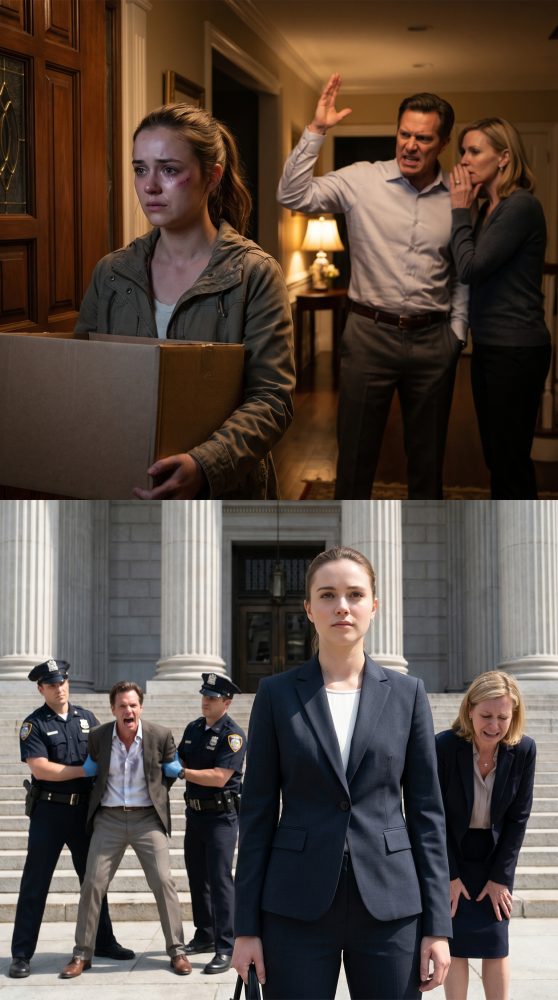
The first time I realized my mother hated me more than she loved me, I was twelve and tasting blood. My father had just backhanded me for answering a question too slowly, and while my ears rang, she crouched beside me, brushed my hair from my face, and whispered, “You know how to annoy him.”
That was her talent. She never had to raise her hand. She only had to stand in the doorway with her arms folded, looking tired and innocent, and let him do the work.
My father was a loud man who liked to fill rooms with fear. He slammed doors, shattered plates, punched walls close enough to my head that plaster dust fell into my soup. In public, he was charming. He sold luxury kitchens, wore expensive watches, and called everyone “friend.” At home, he drank neat whiskey and treated me like a target painted in skin.
My mother was worse because she was quieter. She knew exactly when he was close to exploding. She would tilt the conversation, feed it, sweeten it with little lies. “She rolled her eyes at you.” “She thinks you’re ridiculous.” “She said she doesn’t respect you.” Then she would step back and watch the fire take.
By sixteen, I understood the rules. Do not cry. Do not beg. Do not defend yourself. Anything that looked like resistance thrilled him and irritated her. So I learned stillness. I learned how to take inventory while the storm was raging: where the exits were, where the phones were, where the documents were, what names were written on what envelopes left carelessly on the dining table.
They thought silence meant weakness. It was actually training.
At nineteen, I got into a state university an hour away with a scholarship they barely noticed because they were too busy fighting over money. My father laughed when he saw the letter. “You? Law?”
My mother smiled without showing teeth. “She won’t last a semester.”
I looked down at my hands. “Maybe.”
What they didn’t know was that I had already been recording for two years. Not because I was brave. Because I was tired of being told my memory was dramatic, distorted, cruel. I hid old phones in vents, in drawers, behind books. I backed up audio files to cloud drives under fake names. Dates. Times. Threats. Crashes. His voice. Her whispers.
The day I moved out, my father didn’t help carry a single box. He sat in the living room, watching television too loudly, as if my leaving were a commercial break. My mother followed me to the porch while the movers loaded the last crate.
“You’re making a mistake,” she said.
I kept walking.
Her voice sharpened. “No one will put up with you out there.”
I turned then, not angry, just finished. “We’ll see.”
That night, after I locked the door to my tiny apartment and sat on the floor between boxes, my phone rang. Her name glowed on the screen like an old bruise.
When I answered, she didn’t say hello. “You’re destroying this family.”
I stared at the peeling paint on my ceiling and said nothing.
She waited for me to defend myself. I didn’t.
Then she hung up.
I sat in the silence after the click and let it settle in my chest like a blade being sheathed. Because families like ours survive on noise. On denial. On fear. Silence was the first thing I had ever taken from them.
And six months later, when my mother called back crying, she said something I never expected.
“Please,” she whispered. “He did it to me.”
For three seconds, I thought it was a trick. My mother did not cry unless it bought her something. But the sound coming through the phone was raw, wet, animal. In the background, I heard a cabinet door slam and a man shouting far away.
“Where are you?” I asked.
“At Tina’s,” she sobbed. “I left this morning.”
I stood so fast my chair hit the wall. “What happened?”
A silence. Then, almost too quietly: “He found out about the money.”
Now I listened.
My father had always spent like a man auditioning for wealth. Leased cars. Tailored suits. Business dinners on credit. But the real money in our house had never belonged to him. My grandmother, my mother’s mother, had left a rental property portfolio in a trust. My mother controlled distributions. My father could enjoy the lifestyle, not own the machine.
Until he decided that wasn’t enough.
Over the past year, while I was gone, he had started forging signatures, moving funds, leaning on one of his drinking friends who worked in private lending. He told my mother it was temporary. An investment. A bridge. Then one account bled into another. Debts stacked. Tenants complained. Repairs were ignored. Notices came. My mother tried to stop him, and for the first time in thirty years, the violence turned.
I should have felt sorry for her. Instead I felt cold.
“You helped him build this,” I said.
“I know.” Her voice cracked. “I know what I did to you.”
The apology was ugly and late and incomplete. Still, it hung in the air like a door cracked open during a fire.
“I need somewhere to stay,” she whispered.
“No.”
She made a broken sound. “He’ll ruin me.”
I looked out my apartment window at the courthouse glowing across downtown, all marble and light. “He already did.”
By then I was in my second year of law school, interning at a legal aid clinic by day and clerking part-time for a former prosecutor by night. I knew enough to recognize the shape of a real collapse. Fraud. Coercive control. Financial abuse. Assault. Tax exposure. Licensing violations. My father was not just a violent man anymore. He was a stupid criminal with paperwork.
And stupid criminals are the easiest kind to bury.
My mother started calling every day. At first to cry. Then to confess. Piece by piece, she handed me the map to the house I’d survived.
She told me where he kept cash. Which accountant he used. Which contractors he paid under the table. Which tenant he threatened. Which bruise she covered with turtlenecks. Which documents he burned. Which ones he forgot to.
“You always noticed everything,” she said once, sounding almost amazed.
“Yes,” I said. “You made sure I had to.”
Meanwhile, my father grew smug. He left me three voicemails in one week. In the first, he called me ungrateful. In the second, unstable. In the third, he laughed and said, “Your mother always comes home. She likes comfort more than drama.”
He had no idea she was forwarding me statements, photos, loan agreements, screenshots, even a security clip from the kitchen where he shoved her into the counter hard enough to split her lip.
He thought I was still the girl in the hallway, flinching at his footsteps.
What he didn’t know was that the former prosecutor I worked for had taken a special interest in my case files after hearing one of the old recordings. What he didn’t know was that one of the tenants he’d threatened was now our client. What he didn’t know was that the clinic director had referred my mother to a domestic violence advocate and my father’s lender to a federal investigator already digging into unrelated fraud.
He hadn’t targeted a frightened daughter anymore.
He had targeted a future attorney with evidence, allies, and nothing left to lose.
So when my mother finally asked, “What are you going to do?”
I answered honestly.
“Exactly what you taught me,” I said. “Wait until he thinks he’s won.”
The takedown started on a Tuesday morning with a knock my father opened wearing a silk robe and a smirk. By sunset, his house was a crime scene, his office had been sealed, and his bank accounts were locked so tight even his ego couldn’t get through.
I wasn’t there for the first knock. I was downtown, seated in a conference room with my supervisor, my mother’s advocate, two investigators, and a civil attorney handling the trust emergency petition. Calm. Coffee untouched. Phone face down.
The reports came in layers.
Police executed a warrant tied to the assault evidence and the forged documents. State investigators seized business records related to contractor payments and licensing fraud. The emergency petition froze trust assets and blocked further transfers. Two tenants filed affidavits. One accountant, offered the choice between loyalty and prison, chose self-preservation before lunch.
My father responded exactly as expected: outrage first, then contempt, then panic disguised as volume.
He called me nineteen times.
On the twentieth, I answered.
His breathing was ragged. “What the hell did you do?”
I leaned back in my chair. “Paperwork.”
“You little bitch.”
I smiled without warmth. “Careful. This line is recorded.”
Silence. Then a crash, like something expensive being thrown.
“You think you’re smart?” he snarled. “You think anyone will believe you?”
I glanced at the neatly stacked exhibits in front of me. Audio transcripts. Bank transfers. Photographs. Affidavits. Security footage logs. “They already do.”
He began talking faster, sloppier, making threats he didn’t realize only helped me. I let him run until he cornered himself, then ended the call. Across the table, my supervisor slid me a legal pad with one sentence written on it:
He’s done.
But I wasn’t finished.
My mother wanted to disappear quietly. She would have settled for distance, maybe a sealed file, maybe a quiet divorce funded by whatever scraps remained. She still had the instincts of a woman trained to survive, not to confront.
I didn’t.
Three days later, at the hearing on the trust misappropriation, my father walked in wearing a navy suit and the arrogance of a man who thought charm was evidence. He spotted me at counsel’s table and actually smiled.
For one wild second, I saw my childhood entire inside that expression. Every bruise denied. Every lie polished. Every time he believed the room belonged to him.
Then the judge began reading.
The smile vanished first. Then the color. Then the posture.
Because the documents were real. The signatures were false. The transfers were traceable. The debts were catastrophic. And when opposing counsel tried to paint my mother as a willing participant, our attorney introduced the messages, the photos, the medical report, and finally one short audio clip from an old phone.
His voice. Her silence. My body hitting a wall.
The courtroom went still.
My father stared at me like he had never seen me before.
Maybe he hadn’t.
The judge granted the emergency orders, referred the fraud findings for criminal review, and approved protective conditions so strict my father couldn’t contact my mother except through counsel. Outside, reporters were already waiting because one investigator had tied his lending mess to a broader local scandal.
He lunged toward me on the courthouse steps before the deputies stopped him.
“This is your fault!” he shouted.
I met his eyes. “No. This is your receipt.”
The most surprising part was my mother. Two weeks later, she gave a full statement. No minimizing. No excuses. She admitted what she had done to me. Admitted how often she had baited him. Admitted that she had hidden behind his cruelty because it kept the heat off her until it didn’t.
I did not forgive her that day.
But I watched her tell the truth with a split lip healing yellow at the edges, and for the first time in my life, she looked smaller than me.
Not because I was cruel.
Because I was free.
Eight months later, I stood in a sunlit office with my name on frosted glass and a law license framed on the wall. I worked in family violence litigation now. Fast. Focused. Ruthless in the cleanest way. The kind of lawyer abusers hate because she knows where all the exits are.
My father was awaiting trial on fraud and assault-related charges, broke enough to feel every hour. His business reputation was ash. His drinking friends vanished. His suits looked cheaper in the defendant’s chair.
My mother lived alone in a small apartment paid for through a court-approved support arrangement she had to account for line by line. She was sober now. Quiet. Sometimes she wrote letters I didn’t answer. Sometimes I read them anyway.
One evening, as rain silvered the city outside my window, my phone buzzed with an unknown number. For a heartbeat, the old fear returned.
Then it passed.
I deleted the voicemail without listening, set the phone down, and watched my reflection in the glass.
No flinch. No apology. No blood in my mouth.
Just peace.
The kind you earn after the fire is finally forced to burn its rightful home.