My daughter showed up at my door: “Start packing, Mom — I’ve already sold your house. You’ll move to a nursing home.” I said calmly, “Come in, dear. You might want to see this.” She froze when she saw who was waiting inside.
My daughter showed up at my door: “Start packing, Mom — I’ve already sold your house. You’ll move to a nursing home.” I said calmly, “Come in, dear. You might want to see this.” She froze when she saw who was waiting inside. My daughter showed up at my door on a Friday morning and said, “Start packing, mom. I’ve already sold your house. You’re moving to a nursing home by Monday.” I stood there, coffee cup in my hand, looking at the daughter I raised.
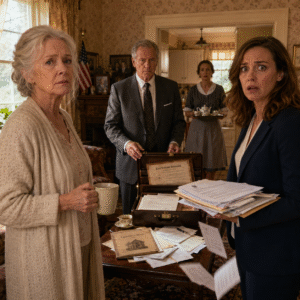
And I said the only thing I could, “Come in, dear. You might want to see this.” Now, let me take you back to that morning. I was in the kitchen making coffee. The light came through the window the way it always did on Fridays. Soft, warm, the kind of light that makes you think everything’s going to be okay. Then I heard her car. Not the gentle sound of someone coming to visit. The aggressive sound of someone coming to take something. The engine cut. The door slammed hard.
She walked in without knocking. Sarah, my daughter, 35 years old, navy blue suit, hair pulled back so tight it looked painful. She carried a stack of legal papers thick enough to be a book. Her face had no smile, just determination, the cold kind. She stopped in the middle of my kitchen. She didn’t sit down. Mom, we need to talk. Actually, no, we don’t need to talk. I’m telling you, I’ve already sold your house. The deal closes in 2 weeks. You need to start packing.
I found a nice nursing home, clean, safe, affordable. I stood there holding my coffee, looking at her. In my head, I saw 30 years flash by. The living room where I taught her to walk. This kitchen where we made birthday cakes every year. The bedroom upstairs where my husband died in my arms. She kept talking. Her voice sounded like a business presentation. You’re too old to maintain this place. The property taxes are ridiculous, and frankly, I need the money for my business. This is what’s best for everyone.
I didn’t yell. I didn’t beg. I didn’t cry. I just set my coffee cup down on the counter. Slow, gentle. I’d imagined this moment for 6 months. Ever since I opened that letter from my late husband, but I never imagined it would feel like this, like watching a stranger wear my daughter’s face. My hand shook a little when I set the cup down. The sound of ceramic touching wood echoed in the silence. The morning light was still beautiful, peaceful. Right before the storm, I could smell my coffee mixed with the smell of fresh ink from her legal papers.
She wouldn’t look me in the eyes when she spoke. She looked down at her documents. I opened my mouth. My voice came out calm. Too calm. Come in, dear. You might want to see this. She frowned. See what? Mom, I don’t have time for. Trust me, you’ll want to make time. Her confident smile cracked just a little because she had no idea what I’d been preparing. And when she found out, everything changed.
I need to tell you how we got here. How a mother and daughter end up on opposite sides of a kitchen table like enemies. I’ve lived alone for 5 years since my husband Tom passed. Heart attack. Quick. Too quick. One day we were planning our retirement. The next day I was planning his funeral. This house is a Victorian. Three bedrooms, quiet neighborhood, the kind where people still wave when they drive past. We bought it 32 years ago for $70,000. Now it’s worth 350,000, maybe more.
Sarah is my only child. She works in real estate development. Married a man named Derek 3 years ago. He flips properties, buys low, sells high. That’s how he talks about everything, including people. The distance started after the wedding. She used to call every Sunday, then every other Sunday, then just texts, short ones. How are you? I’m busy. Talk soon. She stopped coming for holidays two years ago. Too busy with Derek’s family. Too busy with work. Too busy with life. The last time we had dinner together, she looked at her phone the entire time.
I asked her about her day. She said, “Fine,” without looking up. I asked if she was happy. She said, “Of course,” without looking up. I asked if she needed anything. She looked up. Then her eyes changed. She asked if I’d ever thought about downsizing. That’s when I knew. She wasn’t seeing her mother anymore. She was seeing an asset. But here’s what she didn’t know. There were things happening in this house that no one knew about. 6 months ago, I got a phone call from Tom’s lawyer, a man named Richard Patterson. He said there was something I needed to see, something Tom left behind.
I drove to his office on a Tuesday. The building smelled like old paper and furniture polish. Richard met me at the door. He looked uncomfortable, like he was carrying something heavy. He led me to a conference room. On the table sat a sealed envelope, cream colored. My name written in Tom’s handwriting. Richard said Tom had left instructions. This envelope was to be opened exactly 5 years after his death. Not before. Tom had been very specific. I sat down. My hands shook when I picked up the envelope. The paper felt thick, expensive.
I could see Tom sitting somewhere writing this, knowing I’d read it alone. I opened it. Inside was a letter, handwritten, three pages, and a bank statement. The letter started simple. My dearest, if you’re reading this, it means I’ve been gone 5 years. I hope they were good years. I hope you found peace. Then it changed. I knew our daughter would change. I saw the signs before I died. The way she looked at the house, the way she asked about our finances, the way she stopped asking about you.
I sat there in that office reading my dead husband’s words. He’d known. He’d seen it coming. I’ve set up an account. Richard will explain the details. The money is yours. Protected. Use it wisely. And remember, love means teaching even when it hurts. Especially when it hurts. The bank statement showed $875,000. In a trust, my name only, Richard explained. Tom had been moving money quietly for 2 years before he died. Small amounts from investments, from savings, building this safety net. The trust was irrevocable. No one could touch it but me. Not even Sarah. Not even with power of attorney.
I asked why Tom did this. Richard said Tom came to him a year before the heart attack. Said he was worried. Said Derek was bad news. Said he needed to protect me from what might come. I drove home that day with the letter in my purse. I didn’t tell Sarah. I wanted to wait to see if Tom was right, to see if my daughter would come back on her own. 3 months later, Sarah started mentioning nursing homes. Just in passing, just casual suggestions. 6 months later, Derek showed up with real estate contracts.
And now here we were, my daughter in my kitchen telling me she’d already sold my home. Tom had been right, and I hadn’t told anyone what he’d left behind.
Before I tell you what happened next in that kitchen, I need you to understand something. Sarah wasn’t always like this. She wasn’t born cold. She was made that way, slowly. Or maybe I just didn’t see it coming. When she was seven, we baked cookies together every Saturday, right here in this kitchen. She’d stand on a step stool next to me, flour on her nose, chocolate on her fingers. She’d ask me questions about everything. Why is the sky blue? Why do birds sing? Why do people get old? I’d answer the best I could.
And she’d listen like every word mattered. At night, I’d read to her in her bedroom upstairs, the same room that’s been empty for 15 years now. We’d curl up together under her yellow blanket. She’d make me read the same books over and over. Goodnight Moon, Where the Wild Things Are, Charlotte’s Web. When she was 15, she painted me a picture. Watercolors, a house that looked like ours, a garden, two stick figures holding hands. She wrote at the bottom in careful letters. I’ll take care of you when you’re old, Mom.
I still have that picture. It’s in my bedroom. I look at it some nights when I can’t sleep. She graduated high school with honors, then college, business degree. Tom and I worked two jobs each to pay for it. I cleaned houses in the morning, worked retail at night. Tom did construction during the day, drove trucks on weekends. We didn’t mind. She was our investment, our future, our pride. At her college graduation, she hugged me so tight I couldn’t breathe.
She whispered in my ear. I’m going to make you proud, Mom. I’m going to pay you back for everything. I told her she already had just by being who she was. Then she met Derek. The first time she brought him home, Tom pulled me aside. He said, “Something feels off about that one.” I said, “Give him a chance.” Tom said, “I’m trying, but watch him. Watch how he looks at things like he’s pricing them.” I didn’t listen.
I was too happy Sarah had found someone. They got married 3 years ago. Spring wedding, beautiful ceremony. Derek’s family paid for everything. They had money, old money, the kind that makes you feel small when you’re around it. After the wedding, things changed slowly at first, like water freezing. You don’t notice until it’s solid ice. Sarah stopped calling as much. When she did call, she sounded distracted. She’d ask about the house, about repairs I needed, about my expenses, never about me. The first Christmas after the wedding, she said they couldn’t make it. Derek’s family had a tradition. Some ski resort in Colorado.
She promised they’d come for New Year’s. They didn’t. The second Christmas, she didn’t even call. She sent a text at 9:00 p.m. Sorry, got busy. Love you. I tried to visit them once. Drove 3 hours to their house in the suburbs. Big house, new construction, everything white and gray and cold. Sarah gave me a tour like I was a client. She kept checking her phone. Derek barely spoke to me. He was on his laptop the whole time, running numbers, making deals. When I left, Sarah hugged me at the door. It felt like hugging a mannequin. All form, no warmth.
I cried the whole drive home. Tom died 6 months later. Sarah came to the funeral. She stayed 2 days. She cried, but something about it felt performative, like she was crying because that’s what you’re supposed to do, not because she felt it. At the reception, I heard her on the phone in the hallway talking to Derek. She said, “Yes, the house will be mine eventually.” “No, there’s no mortgage.” “Yes, I know what it’s worth.” I pretended I didn’t hear. A year after Tom died, Sarah asked if I’d ever thought about selling, moving somewhere smaller, easier to maintain.
She said it like she was worried about me, but her eyes were doing math. I said I wasn’t ready. This house had too many memories. She said, “Memories don’t keep you warm at night, Mom. Money does.” That’s when I knew the daughter I raised, the one who painted me pictures and promised to take care of me. She was gone and I didn’t know if I could get her back, but Tom had given me the tools to try.
So, there we were back in my kitchen that Friday morning. Sarah standing there with her papers, her confidence, her plans for my life. Come in, dear. You might want to see this. She followed me into the living room, still holding those papers, still thinking she had control. Before you say anything else, there’s someone here you should meet. I opened the door to the study. The room Tom used to use for his paperwork. The room Sarah hadn’t been in since she was a teenager. A man stepped out. 50s gray suit, leather briefcase, Richard Patterson, Tom’s lawyer. Sarah’s face changed. The color drained. What is this? Richard nodded at her. Hello, Sarah.
It’s been a while. She looked at me, then at him, then back at me. Mom, what’s going on? I sat down on the couch, the same couch where Tom and I used to watch TV every night. I gestured for Sarah to sit. She didn’t. Richard, why don’t you explain? He opened his briefcase, pulled out a folder, set it on the coffee table. Sarah, your mother asked me to be here today to clarify a few things about this house.
Sarah clutched her papers tighter. I don’t understand. Richard opened the folder. The house was transferred into an irrevocable trust 6 months ago. Your mother is the sole beneficiary for the duration of her life. She cannot be removed. The house cannot be sold without her voluntary consent, which means the contracts you signed are void. Sarah’s mouth opened. Nothing came out. She looked down at the papers Richard had laid out. Legal documents, trust certificates, property transfers, all dated 6 months earlier. All legal, all final. This can’t be legal. You’re not capable of protecting yourself.
I kept my voice level. Calm. I’m old, sweetheart. Not foolish. She sank into the chair across from me. Her papers slipped from her hands, scattered on the floor. But that wasn’t the only person in the room. Behind Richard, the kitchen door opened. Someone else stepped into the living room. Sarah looked up. When she saw who it was, every ounce of color drained from her face. It was someone she hadn’t seen in 3 years. Someone she’d thrown away. Someone she thought she’d never have to face again.
Let me take you back again to 6 months ago. Right after I opened Tom’s letter, right after I learned about the money, the trust, the protection he’d built for me, I sat in my car outside Richard Patterson’s office for 20 minutes, holding that letter, reading it over and over. Tom’s handwriting, Tom’s words, “Love means teaching, even when it hurts.” I didn’t know what that meant yet, but I knew I needed help. I went back inside. I asked Richard if we could talk. Really talk, not just about paperwork, about my daughter, about what Tom had seen, about what I should do. Richard took me back to that conference room. He sat across from me.
He said, “Your husband came to me a year before he passed. He was worried not just about the money, about Sarah, about the man she married.” What did he say? Richard folded his hands. He said Derek was bad news. He’d done some research. Derek had a pattern: marry well, spend big, then use family assets to cover his losses. Tom found out Derek’s first engagement ended when the woman’s father ran a background check, found debts, bad investments, a history of using people.
I felt sick. Why didn’t Tom tell me? He didn’t want to hurt you. He hoped Sarah would see it herself. But when he got diagnosed with the heart condition, he knew he might not have time to wait. So, he set this up: the trust, the protection. He asked me to watch over you, to be here when you needed me. I asked what I should do. Richard said that was up to me, but he suggested we transfer the house into the trust immediately before Sarah and Derek could make a move. He also suggested something else, a private investigator to find out what they were really planning.
I hired the investigator, a woman named Patricia Brooks, former police detective. She spent three months watching Sarah and Derek, following their finances, their meetings, their plans. She came back with a report. Derek’s business was failing. He owed creditors over $500,000. They were about to lose their house, their cars, everything. And their plan was to sell my house, use the money to cover Derek’s debts, then move me into the cheapest nursing home they could find. Patricia showed me emails, text messages between Sarah and Derek. She’d written, “Once we sell her house, we’re free.” He’d written back, “Finally, your mom’s been sitting on a gold mine. Time to cash out.”
I sat there reading my daughter’s words, seeing how she talked about me like I was a stock she was ready to sell. That’s when I made the decision. I signed the trust papers. I locked the house down. And I waited. I waited to see if Sarah would come to me with honesty, with need, with her real self. She didn’t. She came with lies, with contracts, with demands. And that’s why Richard was in my house that Friday morning.
But let me be honest with you, those 6 months weren’t easy. There were nights I almost broke. Nights I almost picked up the phone. Nights I almost gave in. I’d lie awake at 2 in the morning, staring at the ceiling, thinking about Sarah as a little girl, wondering where I went wrong, wondering if I was being cruel instead of kind. I’d get up, walk to the kitchen, make tea, I wouldn’t drink, sit at the table with my phone in my hand, her number on the screen, my finger hovering over the call button. I’d think, maybe I should just tell her. Maybe I should just help. Maybe this is all a mistake.
Then I’d remember Tom’s letter. Love means teaching. Even when it hurts, I’d set the phone down, walk to the window, look out at the empty street, the street lights casting long shadows, everything quiet, everything still. Part of me wanted to call to say, “Forget the house. Forget the money. Just come home and let’s talk. Let’s fix this. Let’s be mother and daughter again.” But the rest of me knew. If I gave in now, I’d lose her forever, not to distance, but to entitlement, to the belief that people are resources, that love is transactional, that mothers exist to be used. I’d seen it in her emails. Your mom’s been sitting on a gold mine.
