My Daughter Showed Up At My Hollywood Estate: “Start Packing, Mom — I’ve Already Sold The House. You’re Moving To A Nursing Home.” I Said Calmly, “Come In, Dear. You’ll Want To See This.” She Froze When She Saw Who Was Waiting Inside.
My daughter showed up at my door on a Friday morning and said, “Start packing, Mom. I’ve already sold the house. You’re moving to a nursing home by Monday.”
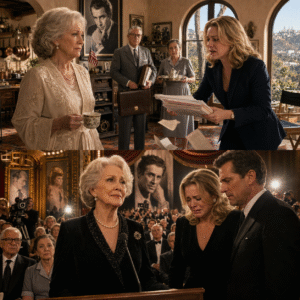
I stood there with a coffee cup in my hand, looking at the child I had raised beneath stage lights, movie posters, and the long shadow of her father’s name.
And I said the only thing I could.
“Come in, dear. You might want to see this.”
Now, let me take you back to that morning.
I was in the kitchen making coffee.
The light came through the old arched windows the way it always did on Fridays, soft and gold, sliding across the Spanish tile floor, touching the copper pans above the stove, warming the framed black-and-white photo of my late husband on the wall.
Thomas Vale.
To most of America, he was Thomas Vale, the director who made three films people still quoted at dinner parties.
To me, he was Tom.
The man who burned toast, sang off-key, cried during dog movies, and read bedtime stories to our daughter in his old director’s chair like every children’s book deserved a standing ovation.
Our house sat high in the Hollywood Hills, hidden behind cypress trees and iron gates. The tabloids used to call it the Vale Estate. They loved that name. It sounded glamorous. It made strangers imagine champagne fountains, parties by the pool, actresses laughing in silk gowns beneath the moon.
They never saw the real house.
The kitchen where Tom taught Sarah how to crack eggs without leaving shells in the bowl.
The back hallway where she learned to ride a scooter and crashed into a wall, leaving a dent Tom refused to repair because “history should have fingerprints.”
The upstairs bedroom where Tom died in my arms five years earlier, so suddenly that I still sometimes woke expecting to hear him ask if I’d seen his glasses.
That morning, the house was quiet.
Too quiet, maybe.
The coffee had just begun to drip when I heard Sarah’s car come through the gate.
Not the gentle sound of someone coming to visit.
The aggressive sound of someone coming to take something.
The tires snapped over the gravel.
The engine cut.
The door slammed hard enough to echo through the courtyard.
I closed my eyes for one second.
Then I opened them.
The moment had arrived.
Sarah walked in without knocking.
She was thirty-five years old, wearing a navy-blue suit sharp enough to draw blood, her dark hair pulled back so tight it made her face look harder than it was. She carried a stack of legal papers thick enough to be a screenplay no one wanted to read.
Her face had no smile.
Only determination.
The cold kind.
She stopped in the middle of my kitchen and looked around, not like a daughter returning home, but like a producer inspecting a location before demolition.
“Mom, we need to talk,” she said.
Then she corrected herself.
“Actually, no. We don’t need to talk. I’m telling you.”
I held my coffee cup with both hands.
“I’ve already sold the house,” she said. “The buyer wants to close in two weeks. You need to start packing.”
The room became very still.
Even the coffee machine seemed to hesitate.
“I found a nice place,” she continued. “A retirement facility in Pasadena. Clean. Safe. Discreet. They handle high-profile residents. You’ll have privacy.”
Privacy.
What a beautiful word people use when they mean disappearance.
I looked at my daughter.
In my mind, thirty-five years flashed by.
Sarah at five, running barefoot through this kitchen with chocolate on her hands.
Sarah at ten, sitting on Tom’s lap in the screening room, arguing that the little girl in his movie deserved more lines.
Sarah at fifteen, painting me a watercolor of our house and writing at the bottom: I’ll take care of you when you’re old, Mom.
Sarah at twenty-one, graduating from USC film school, hugging me so tightly I could barely breathe.
Sarah at thirty-five, standing in front of me with legal papers, telling me I had two weeks to leave the only home I had left.
She kept talking.
Her voice sounded like a pitch deck.
“You’re too old to maintain a place like this. The taxes are ridiculous. The insurance is a nightmare. The roof alone is a liability. And frankly, Derek and I need liquidity before the studio deal closes.”
There it was.
Derek.
There was always a Derek-shaped shadow behind Sarah’s new cruelty.
“This is what’s best for everyone,” she said.
I did not yell.
I did not beg.
I did not cry.
I just set my coffee cup down on the counter.
Slowly.
Gently.
Ceramic touched marble with a small, final sound.
I had imagined this moment for six months, ever since I opened the letter Tom left behind. But I had never imagined it would feel like this — like watching a stranger wear my daughter’s face.
The morning light was still beautiful.
That seemed unfair.
The kitchen smelled of coffee, lemon oil, and the fresh ink from Sarah’s legal papers.
She would not look me in the eyes. She looked at the documents, at the countertops, at the cabinets, anywhere except at the woman who had packed her lunches, paid her tuition, and sat through every student film screening as if it were a world premiere.
I opened my mouth.
My voice came out calm.
Too calm.
“Come in, dear. You might want to see this.”
Sarah frowned.
“See what?”
“Trust me,” I said. “You’ll want to make time.”
Her confident expression cracked just a little.
Because she had no idea what I had been preparing.
And when she found out, everything changed.
I need to tell you how we got here.
How a mother and daughter end up standing on opposite sides of a kitchen like two people negotiating a surrender.
I had lived alone for five years since Tom passed.
Heart attack.
Quick.
Too quick.
One day we were arguing about whether the courtyard fountain needed new tile. The next day I was choosing a coffin while a studio executive cried into a linen handkerchief and asked if we could still release Tom’s final restored cut in the fall.
Grief is strange when the man you lose belongs to the public.
People mourn the icon.
You mourn the socks still folded in his drawer.
This house was never just property to me.
It was a three-story Spanish Revival tucked into the hills, built in the 1920s, all white stucco, red tile, arched doors, old ironwork, and bougainvillea crawling up the walls like it had nowhere better to be.
Tom and I bought it thirty-two years ago, before he became the kind of director young actors quoted in interviews. Back then, it was falling apart. The roof leaked. The pool was cracked. The wiring was a hazard. The upstairs balcony sagged so badly our inspector told us not to stand on it unless we wanted to meet the downstairs floor personally.
We bought it anyway.
For $470,000, which felt impossible at the time.
Now it was worth twelve million.
Maybe more.
Depending on which developer wanted to flatten history and build glass boxes with infinity pools.
Sarah was my only child.
She worked in entertainment development — first as a junior producer, then as a talent manager, and eventually as the co-founder of a boutique production company with her husband, Derek Miles.
Derek had charm.
Not warmth.
Charm.
There is a difference, and it took my daughter too long to learn it.
He produced low-budget thrillers, bought scripts cheap, promised investors glamour, then blamed “market conditions” whenever reality came due. He wore designer sneakers, drove leased European cars, and talked about people the way some men talk about inventory.
Untapped value.
Dead asset.
Conversion opportunity.
The first time Tom met him, he pulled me aside in the hallway while Sarah was showing Derek the screening room.
“Something feels off about that one,” he said.
“Give him a chance,” I whispered.
“I’m trying,” Tom said. “But watch him. Watch how he looks at rooms like he’s already pricing the furniture.”
I laughed then.
I wish I hadn’t.
Sarah and Derek married three years before Tom died.
After the wedding, the distance began slowly.
So slowly I told myself I was being sensitive.
Sarah used to call every Sunday.
Then every other Sunday.
Then just texts.
How are you?
Busy week.
Talk soon.
She stopped coming for holidays two years ago.
Too busy with Derek’s investors.
Too busy with a location scout in Vancouver.
Too busy with a financier dinner in New York.
Too busy with the life she kept insisting she was building.
The last time we had dinner together before everything broke, she sat across from me in this very kitchen and looked at her phone through the entire meal.
I asked about her day.
“Fine,” she said, without looking up.
I asked if she was happy.
“Of course,” without looking up.
I asked if she needed anything.
That was when she looked at me.
Not with love.
With calculation.
“Have you ever thought about downsizing?”
That was the first time I knew.
Not suspected.
Knew.
She was no longer seeing her mother.
She was seeing an asset.
But here is what Sarah did not know.
There were things happening in this house that no one knew about.
Six months earlier, I got a phone call from Tom’s lawyer, Richard Patterson.
Richard had represented Tom from his first studio contract to his final will. He was the kind of man who wore gray suits, spoke in careful sentences, and had seen too many rich families destroy themselves over square footage and resentment.
“Evelyn,” he said, using my first name because he had earned the right, “there’s something I need you to see.”
I knew before he explained.
Some part of me knew.
I drove to his office in Century City on a Tuesday afternoon. The building smelled like old paper, furniture polish, and expensive fear.
Richard met me at the door.
He looked uncomfortable, like a man carrying something heavy in both hands even though his hands were empty.
In the conference room, on the table, sat a sealed cream-colored envelope.
My name was written across the front in Tom’s handwriting.
Evelyn.
Just Evelyn.
No legal title. No formality. No “Mrs. Vale.”
My knees went weak.
Richard pulled out a chair.
“Tom left instructions,” he said softly. “This envelope was to be opened exactly five years after his death. Not before.”
Of course he had.
Tom was romantic, but he was also a director. Even grief, apparently, needed timing.
I sat down and picked up the envelope.
The paper was thick.
Expensive.
I could see him somewhere in this house writing it, knowing I would read it alone.
I opened it.
Inside was a handwritten letter, three pages long, and a financial statement.
The letter began simply.
My dearest Evelyn,
If you’re reading this, it means I’ve been gone five years. I hope they were gentle years. I hope the house still gets that strange golden light in the kitchen on Fridays. I hope you still talk to the roses even though you pretend not to.
I had to stop reading for a moment.
Richard looked away.
Then I continued.
I also know our daughter may have changed. I saw the signs before I died. The way she looked at the house. The way Derek asked too many questions about the trust. The way Sarah stopped asking how you were and started asking what things were worth.
I sat in that conference room with my dead husband’s words in my hands and felt something inside me go cold.
He had known.
He had seen it coming.
I’ve set up protections, the letter continued. Richard will explain the details. The house is yours. The money is yours. Protected. Use it wisely. And remember, love means teaching even when it hurts. Especially when it hurts.
The statement showed $8.75 million in a protected trust.
My name only.
Richard explained that Tom had spent the last two years of his life quietly moving money from old royalties, foreign residuals, restored-film licensing, private investments, and deferred compensation into an irrevocable trust.
No one could touch it but me.
Not Sarah.
Not Derek.
Not even with power of attorney.
I asked why Tom had done this.
Richard folded his hands.
“He came to me a year before his heart attack,” he said. “He was worried. Not about you. About Sarah. About Derek. About what might happen when love, debt, and entitlement started sitting at the same table.”
I drove home that day with the letter in my purse.
I did not tell Sarah.
A part of me wanted to call her that night. To say, Your father left something. He was worried about you. Please come home before this goes too far.
But another part of me, the part Tom had trusted, knew better.
I needed to see if my daughter would come back on her own.
Three months later, Sarah started mentioning retirement facilities.
Casually.
Gently.
As if she were worried.
Six months later, Derek showed up with property valuation documents.
And now here she was, standing in my kitchen, telling me she had already sold my home.
Tom had been right.
And I had told no one what he left behind.
Before I tell you what happened next in that living room, you need to understand something.
Sarah was not born cold.
She was made that way slowly.
Or perhaps I simply did not want to see the making.
When she was seven, we baked cookies together every Saturday in this kitchen. She stood on a wooden stool, flour on her nose, chocolate on her fingers, asking questions about everything.
Why do cameras make people nervous?
Why does Dad say the second act is where stories get honest?
Why do famous people look sad when they have everything?
I answered the best I could.
At night, Tom read to her in the screening room because he said bedtime stories deserved proper lighting. She curled against him in an oversized velvet chair while I sat nearby with tea. He read Goodnight Moon, Charlotte’s Web, The Velveteen Rabbit, and occasionally scenes from old scripts that were wildly inappropriate for a child but made her laugh because he did all the voices.
When she was fifteen, she painted me a picture.
Watercolor.
Our house.
The garden.
Three stick figures in front of the fountain.
At the bottom, in careful letters, she wrote:
I’ll take care of you when you’re old, Mom.
I still had that painting upstairs.
Some nights, when I couldn’t sleep, I took it out and stared at it like evidence from a better trial.
Sarah graduated high school with honors.
Then USC.
Tom and I paid for every semester.
He took commercial directing jobs he hated. I returned to acting in two prestige dramas I did not want because the salary was too good to refuse. We didn’t mind. She was our investment, but not in the financial sense.
She was our proof that love could become someone.
At her college graduation, she hugged me so tightly I could barely breathe.
“I’m going to make you proud, Mom,” she whispered.
“You already have,” I said.
Then came Derek.
After the wedding, Sarah became polished.
Not mature.
Polished.
There is a difference.
She stopped laughing with her whole face. She started using phrases like strategic alignment and legacy monetization. She wore suits that looked like armor. She checked her phone in the middle of hugs.
The first Christmas after the wedding, she said they couldn’t come.
Derek’s family had a tradition in Aspen.
The second Christmas, she sent a text at 9:00 p.m.
Sorry, got buried. Love you.
I tried visiting once.
Their new house in Brentwood was all glass, gray stone, and furniture no one seemed allowed to sit on. Sarah gave me a tour like I was a client. Derek barely looked up from his laptop. He was on a call about bridge financing and pre-sales.
When I left, Sarah hugged me at the door.
It felt like hugging a photograph.
Form without warmth.
Tom died six months later.
Sarah came to the funeral.
She stayed two days.
She cried, but something about the crying felt rehearsed, as if she knew the correct notes but not the song.
At the reception, while old actors told stories about Tom in the courtyard, I heard her on the phone in the hallway.
“Yes, the house will be mine eventually.”
A pause.
“No, there’s no mortgage.”
Another pause.
“Yes, I know what it’s worth.”
I pretended I did not hear.
That was my cowardice.
A year after Tom died, Sarah asked if I had ever thought about selling.
“Memories don’t pay property taxes, Mom,” she said.
That was when I knew the daughter who painted me watercolors and promised to care for me had wandered somewhere very far away.
I did not know if I could bring her back.
But Tom had left me the tools to try.
So, there we were.
Back in my house.
Sarah with her papers.
Me with the calm I had spent six months building one painful layer at a time.
“Come in, dear,” I said. “You might want to see this.”
She followed me into the living room.
Still holding the legal documents.
Still thinking she had control.
The living room had once been a place of premieres and birthday parties, arguments and laughter, directors smoking illegally near the French doors, actresses crying over reviews, Sarah asleep on Tom’s shoulder after watching The Wizard of Oz for the first time.
Now it was quiet.
Waiting.
“Before you say anything else,” I said, “there’s someone here you should meet.”
I opened the door to Tom’s old study.
A man stepped out.
Gray suit.
Leather briefcase.
Silver hair.
Richard Patterson.
Sarah’s face changed.
The color drained so quickly she looked younger.
“What is this?”
Richard nodded.
“Hello, Sarah.”
She looked at him.
Then at me.
Then back at him.
“Mom, what’s going on?”
I sat down on the sofa — the same sofa where Tom and I had watched rough cuts late into the night, arguing about endings.
I gestured for Sarah to sit.
She did not.
“Richard,” I said, “why don’t you explain?”
He opened his briefcase, took out a folder, and laid it on the coffee table.
“Sarah,” he said, “your mother asked me to be here today to clarify a few things about the property.”
Sarah clutched her papers tighter.
“I don’t understand.”
“The house was transferred into an irrevocable trust six months ago,” Richard said. “Your mother is the sole beneficiary for the duration of her life. She cannot be removed. The property cannot be sold, leveraged, leased, transferred, or optioned without her voluntary consent.”
Sarah stared at him.
“The contracts you signed,” Richard continued, “are void.”
Her mouth opened.
Nothing came out.
Richard placed trust documents on the table. Property transfers. Certifications. Dates. Signatures. All legal. All final.
Sarah picked one up.
Her hands trembled.
“This can’t be legal.”
“It is.”
“She’s not capable of managing this property alone.”
I kept my voice level.
“I’m old, sweetheart. Not foolish.”
Sarah sank into the chair across from me.
Her papers slipped from her hand and scattered across the rug.
But Richard was not the only person in the room.
Behind us, the kitchen door opened.
Someone stepped quietly into the living room carrying a tray with three cups of tea.
Sarah looked up.
And froze.
Every ounce of color left her face.
“Margaret?”
Margaret Alvarez stood near the coffee table, calm and steady, dressed in the same soft gray uniform she had worn for fifteen years before Sarah fired her three years earlier.
Margaret had worked for our family since Sarah was in high school. She knew every birthday, every allergy, every hiding place for every spare key. She knew how Tom liked his coffee, which vase I used when I was grieving, and which tone in Sarah’s voice meant she was lying to herself.
Sarah had dismissed her two months after marrying Derek.
Budget reasons, she said.
Image reasons, Derek told someone else.
I had been too tired then to fight.
Now Margaret set down the tray with the grace of a woman who had survived richer people than my daughter.
“Hello, Sarah,” she said.
Sarah looked from Margaret to me.
“What is she doing here?”
I folded my hands in my lap.
“Margaret came back three months ago. After you let her go, she needed work. I needed help. It worked out.”
“You brought her back?”
“Yes.”
Sarah stood.
Her legs shook.
“This is ridiculous. Mom, what are you doing?”
I gestured to the sofa.
“Sit down, Sarah. We need to talk. Really talk.”
She didn’t sit.
She stood there, hands clenched, breathing fast.
Richard cleared his throat.
“Sarah, I think you should hear what your mother has to say.”
“I don’t want to hear anything. This is insane. You can’t do this. The house — I need this money.”
“I know you do,” I said.
“Then help me.”
“I am helping you.”
“By humiliating me?”
“By stopping you from stealing from me.”
The words landed hard.
I stood and walked toward her.
“The house was never yours to sell. It is mine. Your father made sure of that because he knew.”
Sarah’s eyes filled.
“Knew what?”
“That you might choose money over me.”
The sentence hung in the air.
Heavy.
True.
Sarah’s face crumpled, then hardened again as pride tried to rescue her.
“That’s not fair.”
“Tell me the truth,” I said. “All of it. How much does Derek owe?”
She looked away.
“I don’t know what you’re talking about.”
Richard spoke calmly.
“Five million, two hundred and thirty thousand dollars, according to the latest creditor report. Derek’s company is insolvent. The distribution fund collapsed. Your house is in foreclosure. Two investors have threatened litigation.”
Sarah’s head snapped toward him.
“How do you know that?”
“Because your mother hired someone to find out.”
She looked at me as if I had slapped her.
“You had me investigated?”
“Yes.”
“You had no right.”
“I had every right. You were planning to take my home, send me to a facility, sell off my husband’s archives, and use my life to pay for Derek’s failures. What right did you have?”
Sarah sank back into the chair.
For a moment, she looked like someone whose bones had gone soft.
Then she put her face in her hands and began to cry.
Not the pretty kind of crying.
Not the polished tears she had learned for donor events and industry sympathy.
Ugly crying.
The kind that comes from somewhere deep.
“We’re going to lose everything,” she whispered. “The house. The cars. The company. Derek said the foreign distribution deal would close. He said we just needed one more bridge loan. One more investor dinner. One more chance.”
Her voice cracked.
“He promised it would work out.”
Margaret handed her a tissue.
Sarah took it without looking.
Then she looked up at Margaret.
“I’m sorry,” she said.
Margaret nodded.
“I know.”
Sarah turned back to me.
Her mascara had begun to run. Her confidence was gone. The mask had slipped.
“Mom, please. I know I’ve been awful. I know I don’t deserve your help. But I’m begging you.”
I sat down beside her.
Close enough to touch.
But I did not touch her yet.
“I will help you,” I said. “But not the way you think.”
Her eyes searched mine.
“What does that mean?”
“It means you won’t get the money.”
She recoiled.
“You’ll get a chance.”
“A chance?”
“To become the person you used to be. The person I raised. The girl who wrote about integrity. The girl who promised her father she would make films that told the truth. The daughter who once believed people mattered more than things.”
Sarah shook her head.
“I don’t know how to be that person anymore.”
“I know.”
“So what do you want from me?”
“Two weeks,” I said.
She blinked.
“What?”
“You’ll stay here for two weeks. No production calls. No investor meetings. No strategy sessions with Derek. No attempts to fix anything with money you do not have. Just you and me, this house, and the life you forgot.”
“I can’t just leave everything.”
“You already did,” I said. “Three years ago, when you stopped being my daughter and started being Derek’s escape plan.”
Richard left after that.
He said he would be available if I needed him. He shook Sarah’s hand before he went. She barely responded, just sat there staring at the rug as if the pattern might tell her how she had become this woman.
Margaret cleared the teacups.
The sound of porcelain was the only noise in the room.
Finally, Sarah spoke.
Her voice was small.
“Two weeks. And then what?”
“Then we’ll see.”
“If I learn anything?”
“If you’re ready.”
“Ready for what?”
“To be someone I can trust again.”
She wiped her face with the tissue.
“What do you want me to do first?”
“Call your husband.”
Her face tensed.
“And say what?”
“The truth.”
Sarah pulled out her phone.
Her hands shook.
Derek answered on the second ring.
His voice was loud enough that we could hear him from where we sat.
“Where are you? Did she sign?”
Sarah closed her eyes.
“No.”
“What do you mean no?”
“It’s not going to work.”
“Sarah, we don’t have time for this.”
“I know.”
“Then make it work. You’re her daughter. She’ll listen to you.”
Sarah opened her eyes.
“No. She won’t. And I don’t think she should.”
There was silence on Derek’s end.
Then his voice sharpened.
“What the hell are you talking about?”
“I’m talking about the fact that we’ve been lying to ourselves and to each other,” Sarah said. “I need time to think.”
“By abandoning me?”
“No,” she said, and for the first time that morning her voice had a little strength. “By learning how to be a person again instead of just your partner in panic.”
She hung up.
Then dropped the phone on the sofa like it had burned her.
I looked at her.
“That was brave.”
“That was stupid.”
“Sometimes they feel the same at first.”
That night, Margaret made dinner.
Roast chicken.
Carrots from the garden.
A small salad.
Fresh bread.
The kind of meal Sarah used to love before she learned to call restaurants “experiential dining.”
We ate at the kitchen table, the three of us.
Sarah picked at her food.
I could see her mind working, calculating, worrying, trying to find a hidden shortcut in the room.
“Stop thinking about the money,” I said.
“I can’t.”
“Try.”
“How?”
Margaret spoke from across the table.
“Tell us about your morning before you came here.”
Sarah looked confused.
“What?”
“What did you do this morning?”
She frowned.
“I woke up. Derek was already on the phone yelling at someone. I made coffee. Checked emails. Deleted creditor messages. Printed the documents. Drove here.”
“You didn’t eat breakfast?” Margaret asked.
“No.”
“Did Derek ask how you were?”
Sarah looked down.
“No.”
“Did you look in the mirror?”
“I don’t know.”
Margaret nodded.
“You went through the motions. But you weren’t really there.”
Sarah’s eyes filled again.
“I haven’t been there for a long time.”
I reached across the table and took her hand.
It felt thin.
Cold.
“Then let’s bring you back.”
After dinner, I took Sarah upstairs to her old room.
The one that had been empty for fifteen years.
I had kept it almost the same.
The narrow bed with the yellow blanket.
The bookshelf full of childhood books and old film theory paperbacks she pretended to understand at thirteen because she wanted to impress Tom.
The desk where she wrote her first screenplay, twelve pages about a girl who could hear houses talking.
The watercolor painting she gave me at fifteen.
I’ll take care of you when you’re old, Mom.
Sarah stood in the doorway.
Her mouth opened slightly.
“You kept everything.”
“Of course I did.”
“Why?”
“Because I never stopped hoping you’d come back.”
She walked to the bed and sat down slowly.
Her hand moved across the yellow blanket.
“I used to feel safe here.”
“You still can.”
She looked at me.
“I don’t deserve this.”
“You don’t have to deserve love, Sarah. You just have to accept it.”
She lay down, curled beneath the blanket like she was seven again.
I sat beside her and smoothed her hair back the way I had when nightmares were the worst thing she knew.
“Mom?”
“Yes.”
“I’m sorry.”
“I know.”
“For all of it.”
“I know.”
“Do you think I can fix this?”
“I think you can try.”
She closed her eyes.
I stayed until her breathing slowed.
Then I went downstairs.
Margaret was in the kitchen washing dishes.
“You think two weeks is enough?” she asked without turning around.
“I don’t know.”
“But it’s a start.”
“Yes.”
“What if she goes back to him?”
“Then at least she will know she had a choice.”
Margaret dried her hands and looked at me.
“You’re stronger than you look.”
I smiled.
“I had a good teacher.”
She knew I meant Tom.
That night, I lay in my own bed listening to the house settle.
My daughter was upstairs.
The daughter I had almost lost.
The daughter I might still lose.
I looked at Tom’s photograph on the nightstand.
“I hope you’re watching,” I whispered. “I hope I’m doing this right.”
The house creaked.
The wind moved through the palms outside.
And somewhere in the dark, I imagined Tom answering.
You are.
Day two was Saturday.
Sarah came downstairs around nine wearing an old USC film school T-shirt she had found in her drawer. Her hair was messy. Her face was puffy from crying. Without makeup, without the suit, without the hard lines of ambition, she looked younger.
Margaret had made pancakes.
The kitchen smelled like butter and home.
“I’m not hungry,” Sarah said.
“Eat anyway.”
“For what?”
“For what comes next.”
After breakfast, I asked her to help me clean the attic.
She looked at me like I had lost my mind.
“The attic? Now?”
“Now.”
We climbed the narrow stairs, pulled the cord that turned on the single yellow bulb, and stepped into the dust of thirty years.
Boxes everywhere.
Film reels. Christmas decorations. Old costumes. Sarah’s school projects. Tom’s storyboards. Holiday lights. Books. Photographs. The life of a family stacked in cardboard.
I pointed to a corner.
“Start there.”
Sarah knelt and opened a box.
It did not contain Christmas decorations.
It contained letters.
Envelopes addressed to me in her teenage handwriting.
She pulled one out and opened it.
Her voice shook as she read.
Dear Mom,
I got an A on my ethics paper today. Mr. Wilson said I have a strong moral compass. He said I understand the difference between what’s easy and what’s right. I told him I learned that from you and Dad. Thank you for teaching me that people matter more than things.
I hope I never forget that.
Love, Sarah.
She lowered the letter.
“I don’t remember writing this.”
“You did.”
She opened another.
This one from college.
Mom,
Thank you for taking that acting job even though I know you didn’t want it. Dad told me you said yes because tuition was due. I know you and Dad pretend it’s easy, but I know it isn’t. One day, I’m going to take care of you. I’m going to make films that matter. I’m going to make you both proud.
Sarah stopped reading.
Her hand covered her mouth.
“I don’t remember being this person.”
“You were.”
“What happened to me?”
“Life. Pressure. Derek. Ambition. Fear. You forgot.”
She picked up another envelope.
This one was not in her handwriting.
It was addressed to me from Sarah and Derek’s Brentwood house, postmarked two months earlier.
She looked at me.
“What is this?”
“Open it.”
She did.
Her face changed with every line.
Shock.
Confusion.
Pain.
She looked up at me.
“Derek wrote to you?”
“Yes.”
The letter was from Derek.
Mrs. Vale,
I don’t know if I should be writing this, but I can’t stay silent anymore. Sarah wants to sell your house. I’ve tried to stop her. I’ve tried to make her see reason, but she won’t listen. The business failures are my fault. The debt is my fault. But this plan — taking your home, moving you out, selling Tom’s archives — that is coming from her now.
I never meant for this to go this far. I thought I could fix the money. I thought one more deal would turn everything around. It didn’t. I’m sorry. I’m ashamed. And I think Sarah is becoming someone neither of us recognizes.
Please forgive me.
Derek.
Sarah’s hands shook.
“He tried to stop me.”
“Yes.”
“I called him weak.”
“Yes.”
She stood and walked to the small attic window.
Outside, the city shimmered beneath the morning haze.
“I’ve been blaming him,” she whispered. “This whole time. I told myself he pushed me into this. That it was his idea. His pressure. But it wasn’t.”
She turned back.
“It was me.”
I walked over and put my hand on her shoulder.
“That’s the hardest part,” I said. “Realizing you’re the villain in your own story.”
She sank down onto the dusty floor.
“I’m a terrible person.”
“No. You’re a lost person. There’s a difference.”
“How do I fix it?”
“You start by admitting the truth. To yourself. To him. To me. Then you figure out how to become someone different.”
That night, Sarah cried in her room.
Long, painful sobs.
The kind that come from seeing yourself clearly and not liking what you see.
I sat in my bedroom, listening.
Wanting to go to her.
Knowing I should not.
Margaret knocked softly and came in with tea.
“This is hard for you too,” she said.
“It’s the hardest thing I’ve ever done.”
“But it’s working.”
“Is it?”
“She’s breaking open,” Margaret said. “That’s the first step.”
“What if she doesn’t survive the breaking?”
“Then you help her put the pieces back together. That’s what mothers do.”
A week passed.
Seven days of Sarah living in my house.
Helping Margaret with dishes.
Making her bed.
Cooking meals.
Walking through rooms she used to treat like assets and beginning to see memories again.
On day three, she got up early and made coffee without being asked.
On day four, she helped me in the garden, kneeling in the dirt beneath the roses Tom planted twenty years earlier.
On day five, she laughed at something Margaret said.
A real laugh.
Not the controlled, polite sound she used at premieres.
The kind of laugh that comes from the body before the mind can edit it.
On day seven, everything changed.
Derek called.
Not Sarah’s phone.
Mine.
The landline.
The number he had known for years and never used.
“Mrs. Vale,” he said when I answered. “Please don’t hang up.”
“I won’t.”
“Is Sarah there?”
“She is.”
“She won’t answer me.”
“That’s her choice.”
Sarah came into the kitchen and mouthed, Who is it?
“Derek,” I said.
Her face changed.
Fear.
Guilt.
Something else I could not read.
She took the phone and walked into the living room.
I gave her privacy, but voices carry in old houses.
“I know,” she said.
A pause.
“I’m sorry too.”
Another pause.
“No, I’m not coming home yet. Because I need to figure something out.”
Her voice cracked.
“No. Not about us. About me.”
A longer silence.
Then:
“We’re going to lose the house. The cars. The company. Everything. And maybe we need to lose it. Maybe we need to stop trying to save the wrong life.”
I stood in the kitchen holding a dish towel.
Not moving.
After the call, she came back and sat at the table.
“How is he?” I asked.
“Scared. Angry. Ashamed.”
“Are you going back?”
“No. Not yet.”
“Why?”
“If I go back now, nothing changes. We panic. We scramble. We hurt people trying to survive. Then we call it strategy.”
“That’s very wise.”
She laughed sadly.
“It feels like abandoning him.”
“You’re not abandoning him. You’re learning how to be a partner instead of a co-conspirator.”
That night, I made a decision.
I called Sarah into the living room.
Margaret sat nearby in the chair by the window.
“I need to tell you something,” I said.
Sarah looked nervous.
“Okay.”
“Your father left me money. A lot of money.”
She went still.
“How much?”
“Eight million, seven hundred and fifty thousand dollars in a protected trust.”
Sarah’s mouth opened.
“What?”
“I’ve known for six months.”
“You had that this whole time?”
“Yes.”
“And you watched us struggle?”
“Yes.”
Her face twisted.
“Why?”
“Because if I had given it to you six months ago, you would have taken it, paid Derek’s debts, kept the house, kept the cars, kept the company, and learned nothing. Then, the next time you were desperate, you would have reached for someone else.”
She stood and began pacing.
“So this was all a test?”
“No. It was a lesson.”
“That’s cruel.”
“No,” I said. “Cruel would have been letting you become the kind of woman who could sell her mother without feeling shame.”
She stopped moving.
Her eyes filled.
“What if I had failed?”
“Then I would have let you go.”
“Even knowing you could stop everything?”
“Yes.”
“That’s not love.”
“It is,” I said. “Not the soft kind. The real kind. The kind that refuses to save you from consequences when consequences are the only teacher left.”
She sank back into the sofa.
“What happens now?”
I placed an envelope on the coffee table.
“This is five hundred thousand dollars.”
Sarah stared at it.
“It is not for Derek’s debts. It is not for your company. It is not for the investors. It is for your education.”
“My education? I have a degree.”
“Not that kind. You are going to work with the Film Workers Recovery Center downtown. You’re going to sit in rooms with people who lost homes, savings, careers, marriages, dignity. You’re going to learn how money ruins people when they treat it like oxygen. You’re going to learn how people rebuild when no one rescues them.”
She looked at the envelope.
“This won’t save us.”
“I know.”
“Then what is it supposed to do?”
“Change you.”
Sarah picked up the envelope.
Held it like it weighed a thousand pounds.
“I don’t know if I can do this.”
“Then fail honestly,” I said. “That would still be an improvement.”
Margaret spoke then.
“Your mother isn’t punishing you, Sarah. She’s teaching you the hardest lesson there is: some things are worth losing everything for. Integrity. Family. The ability to look in the mirror and recognize yourself.”
Sarah looked at us both.
Then she nodded.
“Okay,” she whispered. “I’ll do it.”
But I could see the struggle in her eyes.
Part of her still wanted to beg.
For the whole amount.
For the rescue.
For the miracle that would let her keep the life she had built out of pressure and fear.
But another part of her knew she had already been given something more dangerous than money.
A chance.
That night, I could not sleep.
I lay in bed listening to the sounds of the house.
The refrigerator humming.
The old pipes settling.
The wind moving through the palms.
Sarah crying again.
But differently now.
Not desperate.
Thoughtful.
The sound of someone grieving who she had become.
I got up and walked to her door.
My hand rested flat against the wood.
I wanted to go in.
I wanted to hold her the way I had when she was small and nightmares were the worst thing she had to face.
But I did not open the door.
She needed to sit with this.
To feel the weight.
To know that pain is not always a sign something is wrong.
Sometimes it means truth has finally arrived.
I whispered too softly for her to hear.
“I love you. And that is why I can’t save you.”
Then I went back to my room.
I did not sleep until dawn.
Week two began on Monday.
Sarah got a text from Derek.
Their house had entered foreclosure.
They had thirty days to move out.
She showed me the screen, her hand shaking.
“It’s really happening.”
“Yes.”
“What do we do?”
“You figure it out.”
“Both of us?”
“Both of you.”
“Where will we go?”
“That is for you to decide.”
“Mom, please.”
“No.”
“Just enough for rent. First and last. Just enough to get an apartment.”
“No.”
“You’re really going to let us be homeless?”
“You will not be homeless,” I said. “You are smart, educated, healthy, and surrounded by information. People figure this out every day with far less.”
She put her head in her hands.
“I don’t know how.”
“Then you’ll learn.”
That week, I watched Sarah make calls to friends she had not spoken to in years.
Most did not answer.
The ones who did were polite but distant.
She had cut them off when life was good.
They remembered.
She applied for jobs.
Not executive jobs.
Real jobs.
Assistant coordinator.
Office administrator.
Receptionist.
Development assistant.
Program associate.
The replies came back thin and cold.
Overqualified.
No current references.
Position filled.
Bad timing.
Derek called every night.
They talked for hours.
I heard pieces through the walls.
Fear.
Shame.
Arguments.
Then, slowly, something else.
Honesty.
On Wednesday, Sarah came into the kitchen.
“We got approved for an apartment.”
“That’s good.”
“It’s small. Not in a great area. But it’s clean.”
“What about Derek?”
“He got a job offer. Accounting assistant at a payroll company that handles indie crews. It pays sixty-two thousand a year.”
“That’s honest work.”
“He’s embarrassed.”
“Good.”
She almost smiled.
“He said the same thing.”
“And you?”
“I have an interview at the Recovery Center.”
I looked at her.
“The one I mentioned?”
“Yes.”
“What changed?”
“I met a woman there yesterday,” Sarah said. “Her name is Maria. She used to work as a costume supervisor before a producer stiffed her on six months of payments. Lost her apartment. Lost her savings. She’s now teaching budgeting classes to crew members.”
Sarah’s voice trembled.
“She told me, ‘At least you had a mother who loved you enough to say no. Mine gave me everything until I learned nothing.’”
I felt tears sting my eyes.
“What did you say?”
“I said I was ashamed.”
“And?”
“She said shame is only useful if you turn it into service.”
That was the beginning.
Two weeks after Sarah first walked into my kitchen with papers and demands, she packed her things.
Not much.
A few clothes.
Her old USC T-shirt.
The letters from the attic.
Derek’s letter.
The watercolor painting from her bedroom.
We stood in the driveway.
Margaret watched from the porch.
Sarah hugged me tightly.
“Thank you,” she whispered.
“For what?”
“For not giving up on me. And for not giving in to me.”
I held her and breathed in the smell of her hair.
The same shampoo she used as a teenager.
“You’re going to be okay.”
“I don’t feel okay.”
“You will. Give it time.”
She pulled back.
“The money… are you ever going to help us with it?”
“Maybe.”
“When?”
“When you don’t need it anymore.”
She laughed through tears.
“That makes no sense.”
“It makes perfect sense. When you’ve learned to live without it, when you’ve built something real on your own, when you understand what money can and cannot do, then maybe you’ll be ready for it.”
“And if I’m never ready?”
“Then you will live a good life anyway.”
She got into her old sedan — the one Derek had kept when they sold everything else — and rolled down the window.
“Mom?”
“Yes?”
“I love you.”
“I love you too, sweetheart. More than you know.”
She drove away.
I watched until the car disappeared past the gate.
Margaret came down the steps and stood beside me.
“You think she’ll make it?”
“I think she’ll try.”
“And that’s enough?”
“For now.”
Three weeks later, Sarah called.
Not to ask for money.
Just to talk.
She told me about the apartment.
Thin walls.
Bad water pressure.
A neighbor who argued with his television.
A kitchen so small Derek had to turn sideways to open the oven.
She told me about Derek’s job, how he left at seven in the morning and came home exhausted, how being the junior man in a payroll office hurt his ego more than losing the house.
She told me about applying for work.
Forty-three applications.
Three interviews.
No offers.
Then she said something that surprised me.
“I started the class at the Recovery Center.”
“How is it?”
“Humbling.”
“Tell me.”
“There’s a woman named Maria.”
“I remember Maria.”
“She works with film crew members who lost everything. She told us her story today. She made twenty-six thousand dollars one year working three productions because two producers delayed payment and one company folded. She had credit cards. A sick mother. Two kids. She was choosing between gas and groceries.”
Sarah paused.
“Mom, when Derek and I were making six figures and still drowning, we weren’t struggling. We were failing. There’s a difference.”
I closed my eyes.
There she was.
My daughter.
Not fully back.
But somewhere closer.
“What did you learn from that?”
“That I have been rich in all the wrong ways.”
A month later, the Recovery Center hired her part-time.
Fifteen dollars an hour.
Twenty hours a week.
Sarah took the job.
Derek laughed when she told him, not cruelly, but in disbelief.
Then he cried.
Because sometimes humility enters a house through the smallest paycheck.
Four months after Sarah left my house, she invited me to dinner at their apartment.
It was in a neighborhood no entertainment executive would choose unless the alternative was a car.
The building was old.
The paint peeled.
The stairs creaked.
But the hallway was clean.
Someone cared.
Apartment 2C.
Sarah opened the door.
She looked different.
Thinner.
Not unhealthy.
Clearer.
She hugged me longer than usual.
“Thank you for coming.”
The apartment was tiny.
One bedroom.
A kitchen barely big enough for two.
A living room with a thrift-store sofa, two plants on the windowsill, and photographs taped to the wall because frames were not in the budget.
It felt more like a home than her Brentwood house ever had.
Derek was in the kitchen cooking spaghetti.
He turned when I entered, wiped his hands on a towel, and walked over.
“Mrs. Vale,” he said. “Thank you for coming. And thank you for what you didn’t do.”
I looked at him.
“What I didn’t do?”
“You didn’t save us fast enough to let us stay the same.”
That was the first honest thing I had ever heard him say.
We ate at their small table.
Spaghetti.
Salad.
Garlic bread.
Simple food made with care.
Sarah told me about her job.
Derek told me about payroll, about learning how crews survive between jobs, about how humiliating it was to understand money only after misusing so much of it.
After dinner, we sat on the thrift-store sofa, cramped but comfortable.
Sarah made tea.
Then she set her cup down.
“Mom, I need to tell you something.”
“Okay.”
“I finished the first counseling course. The Recovery Center asked me to help teach the next one.”
“That’s wonderful.”
“That’s not all.”
Derek leaned forward.
“We’re filing bankruptcy. Officially. Completely. It will destroy our credit for years, but we don’t care anymore. We don’t want to live under lies.”
Sarah nodded.
“We’re not rebuilding the production company. Not now. Maybe not ever. Derek is going to keep his payroll job and take accounting classes. Do it right this time. Slowly. Honestly.”
“And you?” I asked.
“I want to keep working at the center. I want to help people like Maria. People like us. People who think one more deal will save them when what they really need is to stop lying.”
Then she reached into her bag and pulled out the envelope.
The five hundred thousand dollars.
Unopened.
I stared at it.
“You didn’t use it.”
“No.”
“Why?”
Her eyes filled.
“Because I realized you weren’t giving me money. You were giving me a choice. Easy way or hard way.”
“It was help.”
“It was both.”
Derek put his hand over hers.
“We paid for the classes ourselves,” he said. “Twenty-five dollars a week. We saved for it.”
Sarah pushed the envelope toward me.
“We don’t want it.”
“You earned it.”
“No,” she said. “If we take it now, we’re still thinking like people who need rescue. We’re not. We need purpose.”
“What do you want me to do with it?”
Sarah took a breath.
“Use it for other people. For film workers, families, artists, assistants, crews — people drowning in debt and shame. Start something in Dad’s name. Not a handout fund. An education fund. A recovery fund.”
Derek nodded.
“Tom knew,” he said. “He knew we’d need the lesson more than the money.”
Tears ran down my face.
I did not wipe them away.
Tom, still directing us from the other side of the room.
But I had more to tell them.
“There’s something else,” I said.
I reached into my own bag and took out a folder.
Inside were statements.
Trust documents.
Royalty reports.
Old studio accounts.
Sarah frowned.
“What is this?”
“Your father didn’t just leave me eight point seven five million dollars.”
Her face went still.
“What?”
“When everything is added together — royalties, restored-film licensing, foreign rights, old investments, private accounts — the total is twenty-three million dollars.”
Derek’s mouth opened.
Sarah went white.
“Twenty-three million?”
“Yes.”
I pulled out another document.
“Tom’s full letter. I only showed you part of it.”
Sarah stared at the paper.
I read aloud.
My dearest Sarah,
If you’re hearing this, it means you have passed your mother’s test. It means you have learned what money really is: a tool, not a purpose.
The money is your inheritance, but only if you have proven you do not need it. Only if you have learned to build a life without it. If you have, then use it wisely. Start a foundation. Fund education. Help the workers behind the screen, the families nobody sees, the people who keep this industry alive and are discarded when the lights go out.
Turn your mistake into someone else’s second chance.
That is the only way money means anything.
When it is used to lift others.
I love you. I am proud of you. Even when you forget yourself, I believe the real you is still there. Your mother knows too. That is why she will be strong enough to let you fall, so you can learn how to stand.
All my love,
Dad.
The apartment was silent except for Sarah crying.
Deep.
Shaking.
Derek had tears on his face too.
I folded the letter carefully.
“Your father trusted you,” I said. “He trusted us both.”
Sarah could not speak.
Finally, she whispered, “We’re not ready.”
“I know.”
“We need more time. To live without it. To prove to ourselves we can.”
“Take whatever time you need.”
“But when we are ready,” she said, “we’ll use it exactly the way Dad wanted.”
A year and a half after that Friday morning, Sarah called me.
“Mom, can you come to the Recovery Center today?”
“Why?”
“There’s something I want to show you.”
I drove downtown to the old brick building on Sunset that the film unions had once used for overflow offices. Now it housed counseling rooms, a pantry, childcare, legal aid, and financial classes for people whose names never appeared above a title but whose labor made the movies possible.
Sarah met me at the door.
She looked nervous.
Not because she was hiding something.
Because this mattered.
She led me to a classroom.
Inside, fifteen people sat in a circle with notebooks open.
Sarah stood at the front.
Teaching.
Not performing.
Teaching.
She spoke about budgets, needs versus wants, debt cycles, emergency funds, shame, denial, and the way pride can make a person harm the people they love.
Then she told them her story.
Not the polished version.
The real one.
About the house.
The papers.
The plan to move her mother into a facility.
The moment she realized she had become someone she would have despised as a child.
The room listened.
Some nodded.
Some cried.
All understood.
After class, people came up to her.
Asked questions.
Hugged her.
Thanked her.
She answered with patience, humility, and the wisdom of someone who had been broken open and decided to become useful.
When everyone left, she sat beside me.
“So,” she said. “What do you think?”
“I think your father would be so proud.”
Her eyes filled.
“I got certified. Officially. The center hired me full-time. Derek got promoted too. We’re saving. Building an emergency fund. Doing it right.”
“And the foundation?”
She smiled.
“Richard is helping. The Thomas Vale Film Workers Recovery Fund. We started small. Five scholarships this year. Next year, more.”
I took her hand.
“I’m proud of you.”
She leaned her head on my shoulder like she used to when she was little.
“I couldn’t have done it without you.”
“Yes, you could have,” I said. “But you might not have known where to begin.”
Six months later, the public reversal came.
Not in my kitchen.
Not in a lawyer’s office.
Not in a private room where only family could hear the truth.
It happened at the Vale Legacy Gala.
The event was held every year at the old Grand Meridian Theater, where Tom’s first major film premiered forty years earlier. That year, the lobby glowed with gold light and framed stills from his movies. Actors, directors, producers, journalists, donors, studio executives — everyone came dressed in black, silver, and carefully managed nostalgia.
Sarah wore a simple black dress.
No armor suit.
No hard hair.
No desperate shine.
Just Sarah.
Derek stood beside her, nervous but steady.
I wore the pearls Tom gave me on our thirtieth anniversary.
In the front row sat Richard, Margaret, Maria from the Recovery Center, and three scholarship recipients who had once believed bankruptcy was the end of their lives.
The host called me to the stage.
Applause rose.
I stood at the podium beneath a giant photograph of Tom laughing behind a camera.
“For many years,” I began, “people have asked what my husband’s legacy was.”
The room quieted.
“They expected me legacy was.”
The room quieted.
“They expected to say films. Awards. Reviews. The restored cuts. The archive. The house in the hills.”
I looked at Sarah.
She held my gaze.
“But Tom never believed legacy was what you kept. He believed legacy was what you taught someone to give away.”
The screen behind me changed.
Photographs appeared.
Tom reading to Sarah in the park.
Sarah as a teenager holding her watercolor.
A scanned image of his handwritten letter.
Sarah’s face on the side screen filled with tears.
I continued.
“Two years ago, my daughter and I nearly lost each other. Not to death. Not to distance. To money. To fear. To the lie that a person’s value can be measured by what can be sold.”
The ballroom was silent.
“The house survived because Tom protected it. But my daughter survived because she chose to become honest.”
A murmur moved through the audience.
Sarah lowered her eyes.
Not in shame.
In humility.
“Tonight,” I said, “I am proud to announce the full launch of the Thomas Vale Film Workers Recovery Foundation, funded by the inheritance Tom left not for comfort, but for purpose.”
The screen changed again.
The number appeared.
$23,000,000.
The room inhaled.
“And the executive director,” I said, “will be my daughter, Sarah Vale Miles.”
The applause did not begin immediately.
It had to pass through surprise first.
Then recognition.
Then emotion.
Then it rose.
Loud.
Real.
Not the polite applause people give at charity galas.
This was the sound of a room understanding that the woman they had dismissed as another fallen industry daughter had been forced through fire and come back carrying water for others.
Sarah stood slowly.
Derek squeezed her hand.
She walked to the stage.
At the stairs, she paused.
Then turned toward the audience.
“There is something you should know,” she said.
My breath caught.
This was not in the program.
Richard leaned forward.
Sarah stepped to the microphone.
“Two years ago, I tried to sell my mother’s house without her consent. I wanted to put her in a nursing home and use the money to cover debts my husband and I had created through pride, denial, and fear.”
The room went completely still.
Camera flashes stopped.
Even the waiters froze.
“I am not proud of that,” Sarah said. “But I will not hide it, because hiding shame is how it keeps owning you.”
She turned toward me.
“My mother loved me enough to say no. My father loved me enough to leave a lesson I could not understand until I lost nearly everything.”
Her voice trembled.
“I stand here tonight not because I earned forgiveness by becoming impressive, but because I learned that love is not rescue. Love is truth. And sometimes truth is a locked door.”
The applause came slowly.
Then fully.
Then the room stood.
I stood too.
Not because the room did.
Because my daughter had finally returned to herself in front of everyone who once would have measured her by status, access, and money.
Sarah reached for me.
I went to her.
We embraced beneath Tom’s photograph while the whole theater applauded.
For the first time since his death, I did not feel like I was carrying his legacy alone.
Two years after that Friday morning, Sarah called and asked if I wanted to go somewhere with her and Derek.
“Where?”
“You’ll see.”
We drove to Griffith Park, to the small stone bench near the overlook where Tom proposed to me forty-three years earlier. The place where we brought Sarah after she came home from the hospital. The place where Tom used to read to her on Sundays when he claimed the city looked most honest from a distance.
I had not been there in fifteen years.
Not since Tom died.
It hurt too much.
But now here we were.
Leaves moved across the path.
The air smelled like eucalyptus, dust, and memory.
Sarah led me to the bench.
I stopped walking.
My hand went to my chest.
“This bench,” I whispered.
Sarah smiled.
“I remember, Mom.”
I sat down and ran my hand over the stone.
Derek sat on the grass a little distance away, giving us space.
Sarah sat beside me, close enough that our shoulders touched.
“Do you remember what Dad used to say when we came here?”
“Tell me.”
“He’d say, ‘This is what matters. Right here. This moment. This place. These people. Not the house. Not the car. Not the bank account. Just this. Just us.’”
Tears came before I could stop them.
“He did say that.”
“I forgot it for so long,” Sarah said. “I thought success meant having more. Being more. Proving more. I thought love was something you earned by being impressive.”
She took my hand.
“Now I know love is being present. Being honest. Being yourself with people who see you and stay anyway.”
We sat there.
Mother and daughter.
On the bench where so much had begun, been lost, and found its way back.
Then Sarah reached into her bag and pulled out a folder.
“What’s this?” I asked.
“The foundation papers.”
“I thought those were already done.”
“They are. But these are the first-year reports.”
She opened the folder.
Photographs.
Families.
Crew members.
Certificates.
Letters.
“This is Maria,” Sarah said. “She finished the training program. She’s managing the center’s new emergency grant office now.”
She flipped to another.
“This is a lighting assistant who lost his home after a production folded. He’s debt-free now and teaching budgeting workshops.”
Another.
“This is the Martinez family. Their apartment burned. No insurance. We helped them rebuild — not just with money, but with a plan.”
She looked at me.
“We’ve given out sixty-seven scholarships. Helped one hundred and twelve families. And we’re just getting started.”
I looked at every face.
Every story.
Every life touched by the money Tom had hidden, the lesson Sarah had learned, the no I had almost been too weak to say.
“Your father is so proud of you,” I said.
“I hope so.”
“I know so.”
She leaned her head on my shoulder.
“Do you forgive me, Mom? For what I almost did? For who I almost became?”
I turned and took her face in my hands the way I did when she was a child and needed to hear something important.
“There is nothing left to forgive,” I said. “You were lost. Now you’re found. That is what matters.”
Years have passed since that Friday morning.
I still live in the house.
The Vale Estate, as the magazines insist on calling it.
But it no longer feels like a mausoleum.
Sarah comes every Sunday now.
Derek too.
Margaret still makes tea and pretends not to enjoy scolding everyone. Richard still handles the legal work and complains that no family should require this many documents to learn basic decency.
The foundation has grown.
The house hosts workshops in the old screening room once a month. Crew members, young actors, assistants, costume workers, drivers, editors, background performers, all sitting beneath Tom’s film posters learning about debt, shame, budgets, contracts, emergency funds, and the difference between needing help and using people.
Sometimes I stand in the back and watch Sarah teach.
She is not the girl she was.
Not entirely.
No one returns unchanged from their worst self.
But she is honest now.
And honesty is better than innocence.
One morning, years later, I found the old watercolor on my desk.
The one she painted at fifteen.
The house.
The garden.
Three stick figures.
I’ll take care of you when you’re old, Mom.
Beside it was a new frame.
Inside was a photograph from the gala.
Sarah and me onstage beneath Tom’s portrait, holding each other while the room stood.
On the back, she had written:
You took care of me when I forgot how to be your daughter.
Now let me spend the rest of my life remembering.
I sat at Tom’s desk and cried.
Not because I was sad.
Because I finally understood what he had meant.
Love means teaching even when it hurts.
Especially when it hurts.
My daughter showed up at my door one Friday morning with legal papers, a buyer, and a plan to sell my life out from under me.
She thought I was old.
She thought I was alone.
She thought the house was the treasure.
She was wrong about all of it.
The treasure was never the house.
It was the lesson her father left behind.
It was the strength I found to say no.
It was the daughter who had to lose everything false before she could return to everything true.
And it was the quiet, brutal, beautiful fact that sometimes a mother’s love does not look like rescue.
Sometimes it looks like a locked door.
Sometimes it looks like a lawyer waiting in the study.
Sometimes it looks like a housekeeper carrying tea.
Sometimes it looks like letting your child fall far enough to remember how to stand.
THE END
