I said nothing. Years in the military teach you many things. How to read weather. How to land under pressure. How to breathe through fear. How to identify hostile territory before the first shot. This was hostile territory. The difference was, in combat, at least people were honest about wanting you gone.
My father leaned closer. “If you embarrass this family tonight, I’ll make sure Clare regrets inviting you.” There was the real threat. Not to me. To her. Always someone else used as leverage.
Fifteen years had passed, and he was still using money like a leash. Clare’s apartment. Her car. Half the wedding. Her trust. His generosity always came with invisible handcuffs. “You don’t control me anymore,” I said. His eyes narrowed. “No,” he said. “But I still control enough.”
Then he walked away. Margaret followed, leaving perfume and old poison behind her. I should have left then. I almost did. My car was in the overflow lot. Three hundred yards away. I could have driven back to the base, hung the dress in the closet, and told myself I had tried. But Clare had said stay. So I stayed.
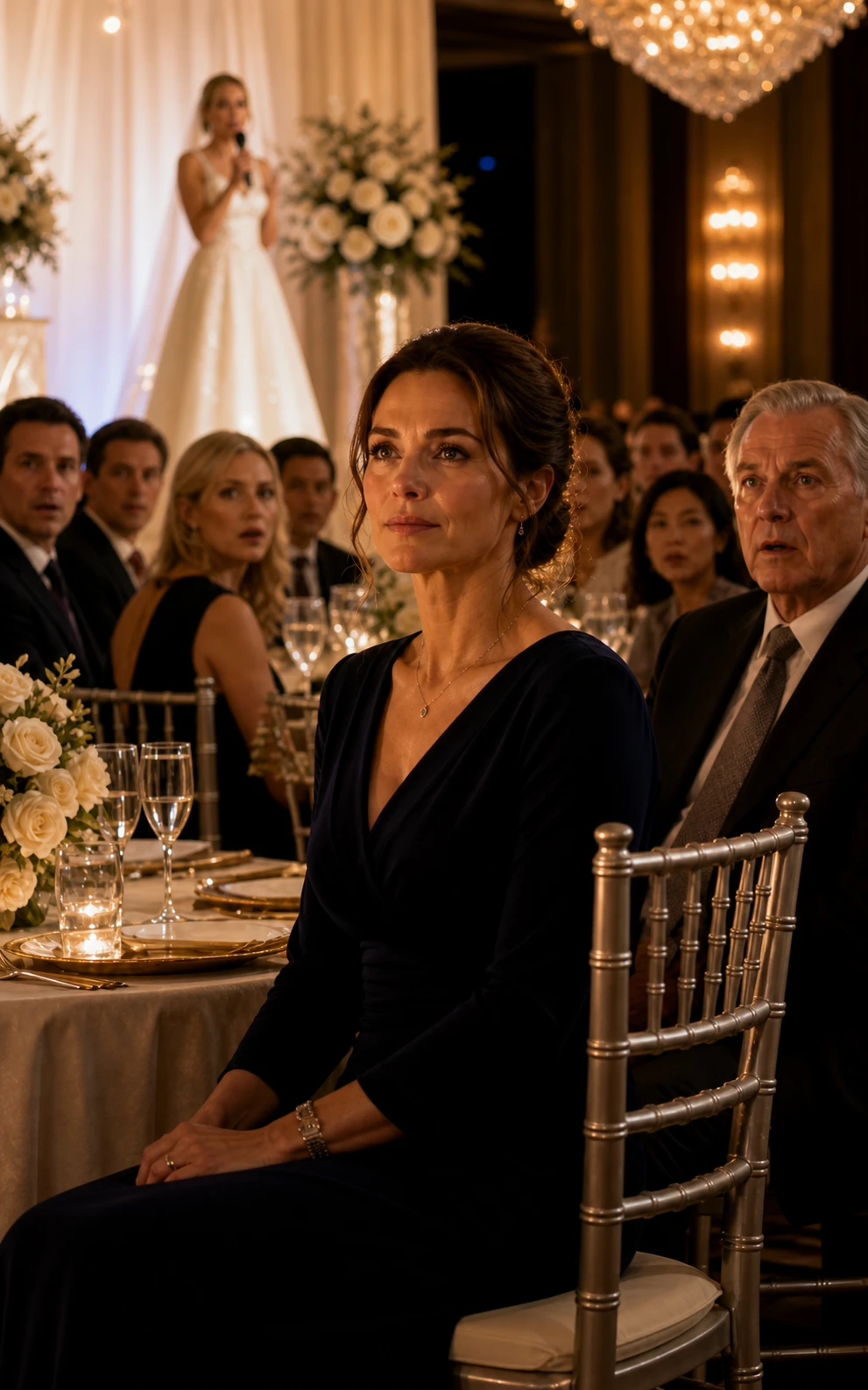
Dinner began at seven. Two hundred fifty guests filtered into the ballroom, finding their gold-rimmed plates and little handwritten cards. Mine still said non-priority guest. I placed it face down.
At table one, my father stood. Glass of Bordeaux in hand. He tapped it with a fork. The room quieted immediately. Of course it did. Gerald Ulette had spent his life making rooms quiet for him.
“Clare has always been my pride,” he began. The warmth in his voice was practiced. Professional. Believable to people who had never been cut by it. “She understood that family means loyalty.” A pause. “She understood that when you’re given everything, you don’t throw it away chasing fantasy.”
There it was. Not my name. He did not need my name. The room understood. A few guests looked toward me. Some quickly looked away. Others did not bother hiding their curiosity.
My father smiled faintly. He was enjoying this. “She knew her worth,” he continued. “And that is why tonight, we celebrate a daughter who never forgot where she came from.”
The applause rose politely. Controlled. My father lifted his glass toward Clare. But across the ballroom, Clare was not smiling. Her hand was wrapped around David’s under the table. Her knuckles were white. Her eyes found mine. And she gave one tiny nod. Wait. That nod said wait. So I did.
I sat there at table 22, near the kitchen doors, with fake flowers in front of me and my father’s insult still burning in the air. Then he came to me again. Not satisfied with the speech. Men like my father never stop at one wound when the first one lands well.
This time, he had an audience. Margaret beside him. His business partner Richard Hail across from me. A few guests nearby pretending not to listen. My father stood over my chair, glass in hand. “If it wasn’t for pity,” he said, loud enough for three tables to hear, “no one would have invited you.”
The room around us went still. A waiter froze with a basket of bread. Someone at the next table lowered her fork. Margaret’s hand rested lightly on my father’s sleeve, but she did not stop him. Of course she didn’t. She had waited years to see me humiliated properly.
I looked up at my father. The man who threw me out. The man who erased my photographs. The man who told the world I failed because it was easier than admitting I had chosen a life outside his control.
Fifteen years ago, those words would have destroyed me. I would have cried. Run. Begged. Explained. Searched his face for any sign that he regretted hurting me. But I was not twenty-two anymore.
I lifted my wine glass. Took one slow sip. Then said quietly: “Funny thing about pity. The people who give it usually need it most.”

Leave a Reply